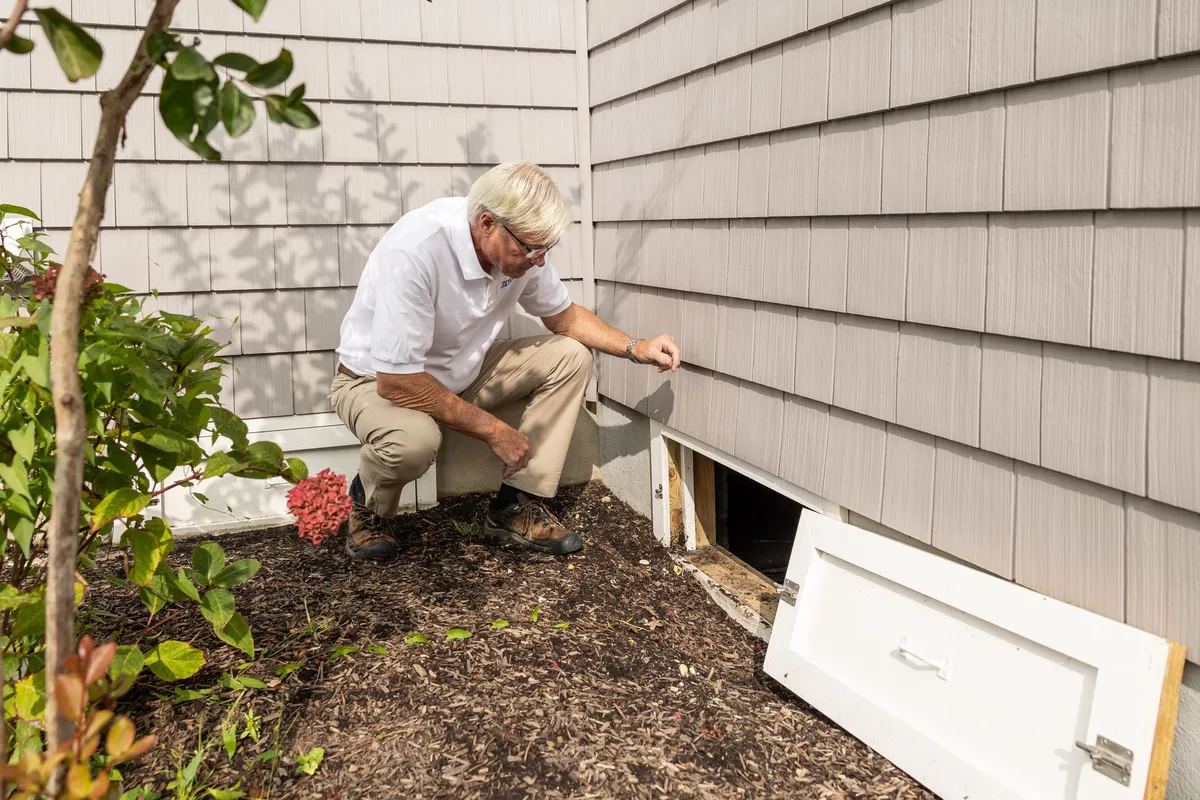
A termite inspection in Florida is a visual check of a home for termites and other wood-destroying organisms (WDO), done by a licensed pest control company. FDACS recommends having your home inspected every year by a licensed company to protect it from subterranean termites, and when the inspection is for a home sale, Florida law sets out exactly what the written report must say. Because homeowners insurance does not cover termite damage, according to FDACS, the inspection is the main way to catch a problem before it becomes a repair bill.
This guide explains when to book an inspection, what the inspector looks at, what a WDO report for a real estate transaction must include under section 482.226 of the Florida Statutes, what the report does not promise, and how to reach a participating company in your area.
To check by phone whether a participating termite company serves your address, call (888) 217-7523. Florida Pest Control Pro does not perform inspections; we may be paid when you call.
When to book a termite inspection in Florida
- Every year. FDACS lists an annual inspection by a licensed pest control company as the first prevention step for subterranean termites on its subterranean termite page.
- Before buying or selling a home. Whether your contract or lender requires a WDO inspection is a question for your agent; if one is made for the transaction, the rules below apply.
- After you see signs. Mud tubes on the foundation, winged insects indoors in the evening, or discarded wings on a windowsill. FDACS says that if you see drywood termite swarmers or just their wings, you should contact a pest management professional for an inspection and an identification.
- When your treatment contract renews. If you already have a termite contract, the inspections it specifies are part of it, and Florida law requires a signed report after them (see below).
What the inspector looks at
An inspection covers the visible and accessible parts of the structure. Expect the inspector to look at:
- the foundation and slab edges, for mud tubes, which subterranean termites build to move above ground (FDACS uses them for detection),
- the attic, roof framing, eaves, soffits and fascia, which FDACS lists as typical entry points for drywood termites,
- window and door frames, baseboards and wood siding,
- the crawl space, if the house has one,
- conducive conditions: leaks, gutters and sprinklers that wet the walls, mulch against the foundation, wood touching soil.
FDACS says termites can use cracks as thin as a credit card to get into a structure, so cracks in the foundation and around the exterior are noted too.
What a Florida WDO report must include
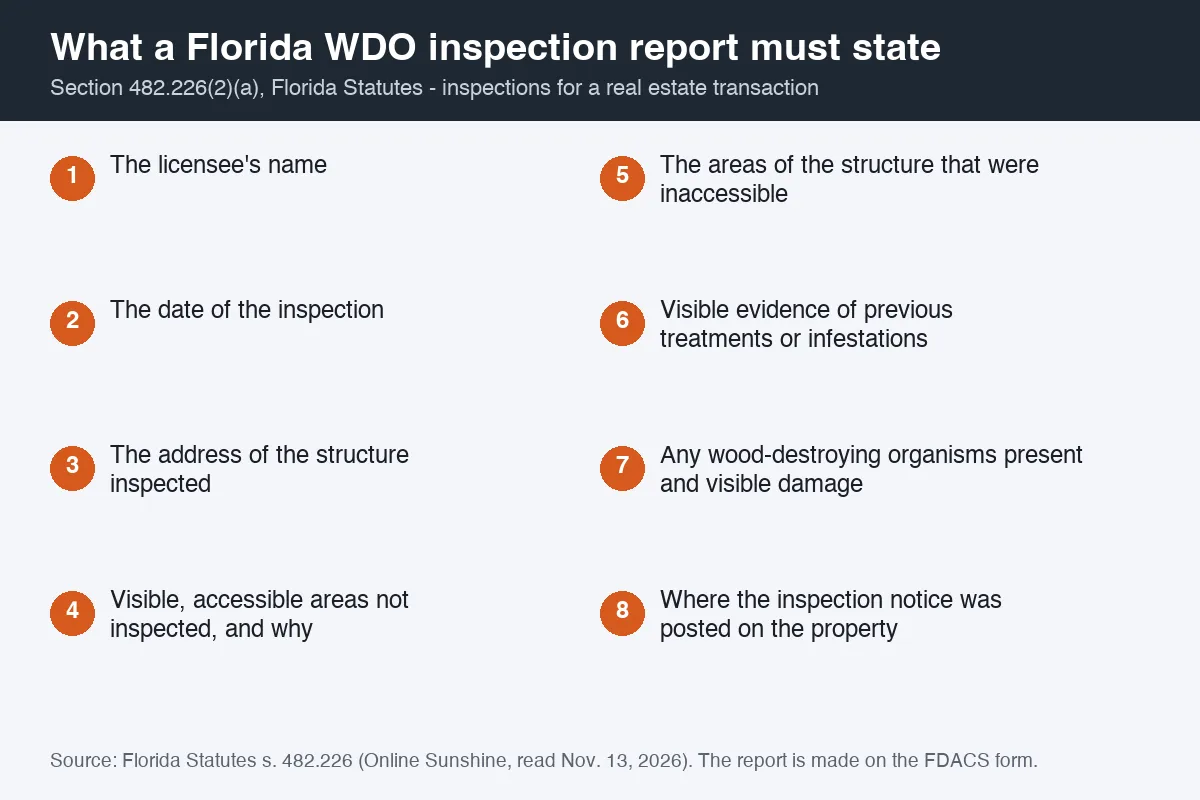
When a licensee inspects for wood-destroying organisms for a real estate transaction and either charges a fee or is asked for a written report, section 482.226 requires a WDO inspection report on a form prescribed by the department. The inspection must cover all wood-destroying organisms, and the licensee must keep a copy for at least 3 years.
| The report must state | Why it matters to you |
|---|---|
| The licensee’s name and the date of the inspection | Lets you verify the company and how recent the findings are |
| The address of the structure inspected | Confirms which building was covered (a detached garage or shed may not be) |
| Visible, accessible areas not inspected, and the reasons | Shows what was skipped and why, such as stored items blocking a wall |
| Areas of the structure that were inaccessible | Tells you where nobody could look, such as a sealed attic |
| Visible evidence of previous treatments or infestations | Reveals history the seller may not have mentioned |
| Wood-destroying organisms present and visible damage | The core finding: what was seen, and where |
| A statement that the inspection notice was posted, and where | Lets you find the notice on the property |
The report must also certify that neither the inspector nor the licensee has any financial interest in the property or any role in the transaction other than the inspection. If a treatment was done at the time of the inspection, the report must name the organisms treated, the pesticide used and the conditions of that treatment. Our step-by-step guide to reading a Florida WDO report (FDACS Form 13645) walks through the form section by section.
What the report does not promise
Section 482.226 is clear that an inspection report is not a guarantee that there are no wood-destroying organisms or damage, unless the report specifically states the extent of such a guarantee. The inspection is visual, limited to what was accessible on that day. If the report lists inaccessible areas, ask whether they can be opened up for a second look before closing on a house.
Need an inspection before a closing date? Call (888) 217-7523 and mention the date you need the report by.
The notice in your attic or crawl space
After a WDO inspection for a real estate transaction, Florida law requires the licensee to post a notice next to the access to the attic or crawl area, or another readily accessible area. It must be at least 3 by 5 inches, made of a material that lasts at least 3 years, and show the licensee’s name and address and the date of inspection. A separate notice is required after any treatment for wood-destroying organisms, stating the pesticide used and the organism treated. Only the property owner may remove these notices.
If you are buying a home, look for these notices during your walk-through. They are a quick record of past inspections and treatments.
Who can inspect, and how to check them
Section 482.226 says a person may not perform inspections or treatments unless they hold an identification card issued under chapter 482, and that licensees performing WDO inspections for real estate transactions must carry errors and omissions insurance or a bond of no less than $500,000 in the aggregate and $250,000 per occurrence, or show an equivalent net worth. Ask to see the inspector’s identification card. Our guide on checking a Florida pest control license explains how to look up the company with FDACS.
If the inspection finds termites
FDACS says it is very important to identify the type of termite, because treatments vary with the type. Subterranean termites are usually treated with a non-repellent soil barrier or an in-ground bait system around the home; drywood termites may call for tent fumigation, heat or localized treatments. Our page on termite control in Florida covers the next steps.
Questions homeowners ask
Does Florida require a termite inspection to sell a house?
Section 482.226 does not require an inspection for every sale; it governs the report when a licensee inspects for a real estate transaction and charges a fee or is asked for a written report. Your purchase contract or lender may ask for one, so check with your agent.
How often should a Florida home be inspected for termites?
FDACS recommends an annual inspection by a licensed pest control company as part of preventing subterranean termites.
Is a clean WDO report a guarantee?
No. The statute says a report is not a guarantee of the absence of wood-destroying organisms or damage unless it specifically states the extent of a guarantee.
How long does the company keep my inspection report?
For WDO inspections made for a real estate transaction, the licensee must keep a copy for at least 3 years.
Does homeowners insurance cover termite damage in Florida?
FDACS says homeowners insurance does not cover damage caused by termites.
Homeowners in Lee County and Alachua County can also start from our Cape Coral pest control page or our Gainesville page.
Sources, consulted November 13, 2026: Florida Statutes, section 482.226 (Online Sunshine); FDACS, Termites; FDACS, Subterranean Termites; FDACS, Dampwood and Drywood Termites. General information, not legal advice; statutes can change.
Checking what is available in your area
floridapestcontrolpro.com is a connection service. We do not perform pest control or inspections and we do not employ technicians. To check whether a participating independent provider serves your address, call the number on this page: a partner call service routes the call where a provider is available, and we may be paid when you call. Availability varies by area and by season, and you decide whether to move forward with anyone you speak to.
To check by phone, call (888) 217-7523 and say whether the inspection is for a home sale or for your own house.