Author: Florida Pest Control Pro Editorial Team

  • Natural Pest Control in Florida: What Works and What to Ask

    Natural Pest Control in Florida: What Works and What to Ask

    Natural pest control in Florida usually means integrated pest management (IPM): preventing pests first, then using the least toxic product that works, applied only where it is needed. The University of Florida’s IFAS Extension describes IPM as an approach that favors the least toxic method, pest-resistant plants and the natural enemies of pests, and it recommends spot treatments over blanket spraying. Plant-based oils and soaps have a place in that approach, but “natural” does not automatically mean registered, tested or right for every pest, and termites are a different job entirely.

    This guide explains what natural and low-toxicity pest control can and cannot do in a Florida home and yard, what UF/IFAS says about the common products, how to ask a pest control company for a lower-toxicity plan, and how to reach a participating provider in your area.

    To check by phone whether a participating pest control company near you offers a low-toxicity plan, call (888) 217-7523. Florida Pest Control Pro does not perform pest control; we may be paid when you call.

    What “natural” pest control means in practice

    UF/IFAS’s Living Green guide to IPM breaks the approach into five parts:

    1. Cultural: choosing and maintaining plants and lawn properly (mowing, pruning, irrigation) so they are less prone to pests.
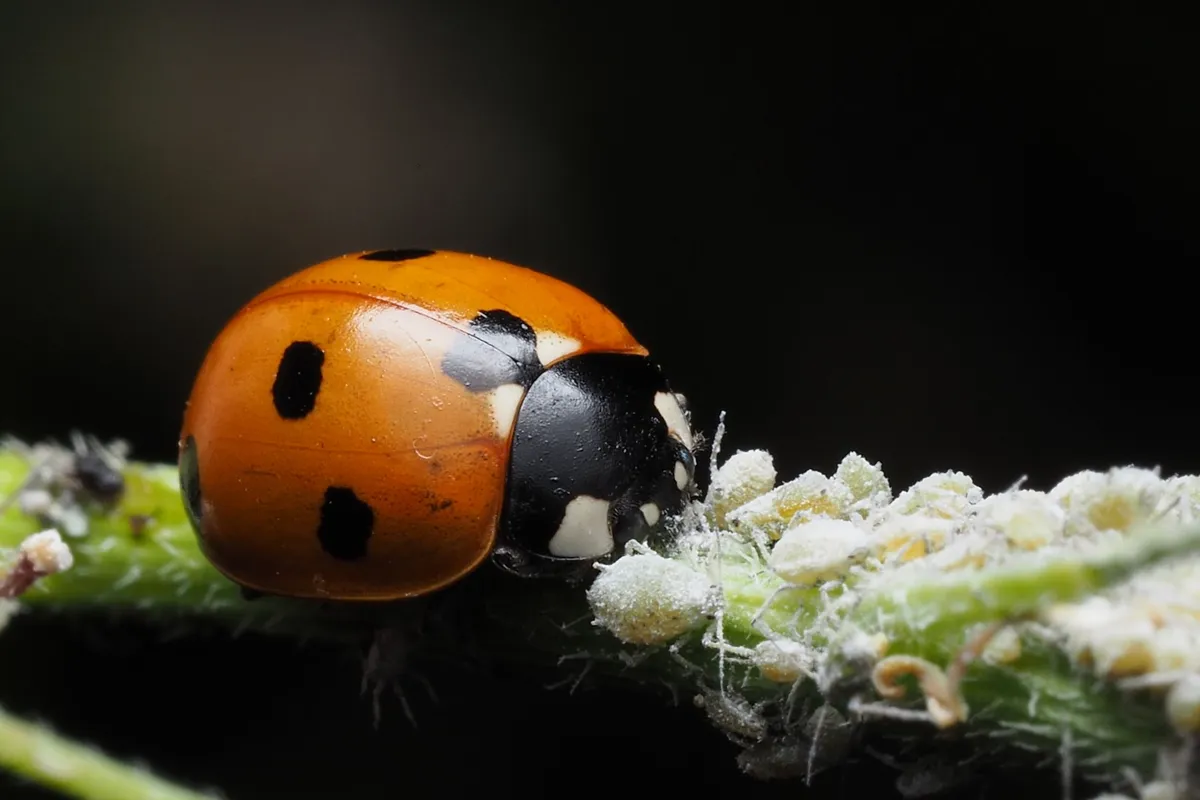
    2. Biological: releasing or conserving natural enemies, such as ladybugs or mantids, and planting a variety of flowering plants that support beneficial insects.
    3. Genetic: choosing grasses and plants bred to resist key pests.
    4. Chemical, when needed: choosing newer, more selective products, such as a microbial insecticide or an insect growth regulator, and treating only the affected plant or area.
    5. Monitoring: walking the yard about every two weeks, identifying pests and treating early.

    The Florida-Friendly Landscaping program puts it in one line in its principle on managing yard pests: spot treat only if pesticides are used, start with the least toxic products, and protect beneficial insects by not spraying routinely.

    Natural products UF/IFAS describes, and their limits

    UF/IFAS Gardening Solutions has a detailed page on natural pest and disease management. It lists real advantages, such as quicker breakdown in the environment, fast action on contact for some products and generally low to moderate toxicity to mammals, and real drawbacks.

    Product type What UF/IFAS says it targets Limit to know
    Citrus oils (limonene, linalool) Kill fleas, aphids, mites, fire ants, several flies, paper wasps and house crickets on contact Use with caution on new or sensitive plants
    Neem oil and azadirachtin Soft-bodied pests such as whiteflies and mealybug and scale nymphs; azadirachtin targets the immature stages of chewing pests Potency varies between products
    Essential oil blends May affect larger insects Effectiveness is not consistent; pennyroyal is toxic if ingested
    Horticultural oils Piercing-sucking insects, mites and small soft-bodied insects Do not apply above 90°F; no residual effect
    Insecticidal soaps Aphids, soft scales, whiteflies, mealybugs, thrips, spider mites, by direct contact No residual effect; some plants are too sensitive, so test first

    Two cautions from the same page matter when you shop or hire:

    • Florida registration. Not all products sold online are registered for legal sale in Florida. UF/IFAS suggests checking the National Pesticide Information Retrieval System.
    • EPA review. Some products are exempt from EPA review, so safety and effectiveness data are not always available. The EPA confirms that certain minimum risk pesticides are exempt from registration under federal law because the agency determined they pose little to no risk; exemption from registration is not the same as proof that a product works on your pest.

    Because natural products break down quickly, UF/IFAS notes that repeat applications may be necessary. That is a practical point when you compare a “green” service plan with a conventional one: ask how often the company will need to come back.

    Where natural methods work well, and where they do not

    Low-toxicity, IPM-style control fits many common Florida problems: aphids and whiteflies on landscape plants, occasional ants coming indoors, and mosquitoes breeding in containers around the house. In each case, prevention and spot treatment do most of the work.

    It is a different story for structural pests. For termites, FDACS lists the treatments professionals use, such as soil barriers and bait systems for subterranean termites and fumigation, heat or localized treatments for drywood termites, and recommends that any pesticide application be done by a licensed pest management company. FDACS does mention localized drywood treatments with essential oils registered for use in Florida, but only as one professional option, chosen after an inspection. Our page on termite control in Florida covers that side.
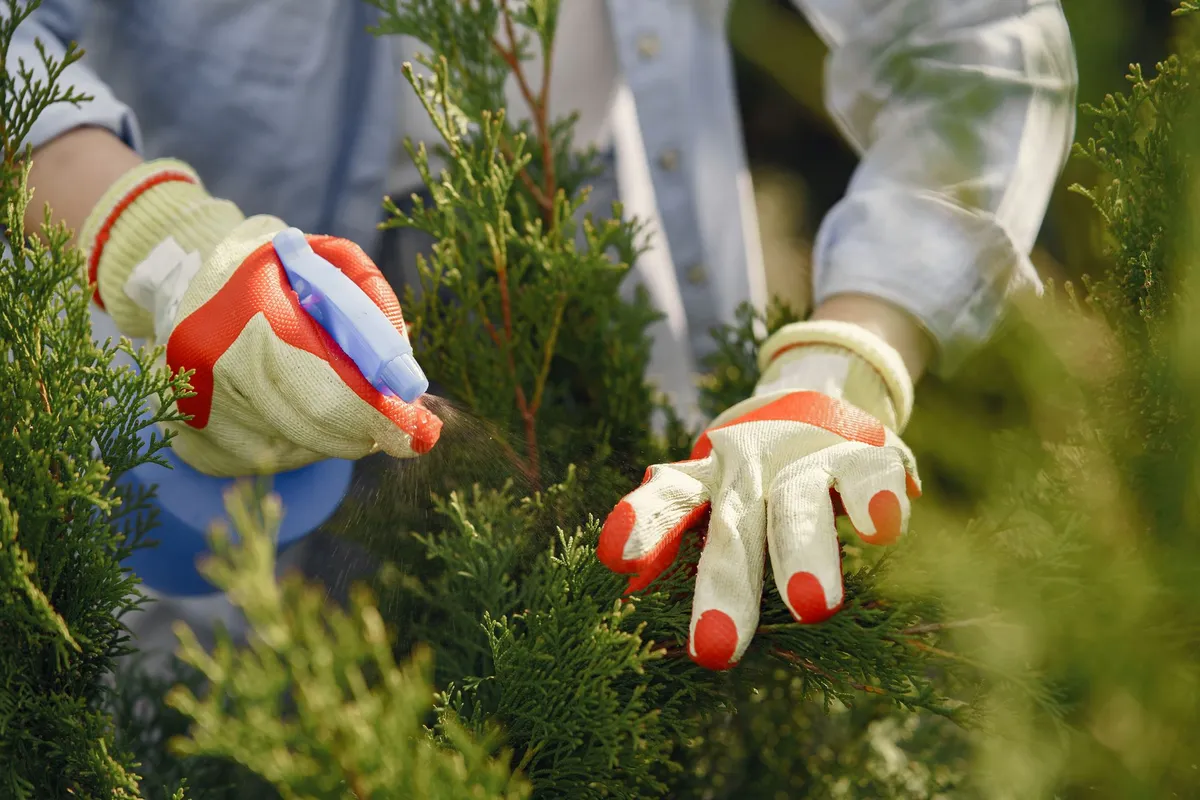
    Gloved hands spot-spraying a single shrub with a hand sprayer
    Spot-treating one affected plant rather than spraying the whole yard, as UF/IFAS recommends. Photo: Gustavo Fring / Pexels.

    Want to compare low-toxicity plans from companies near you? Call (888) 217-7523 and say which pest you are dealing with and that you want the least toxic option.

    How to ask a pest control company for a natural or low-toxicity plan

    UF/IFAS gives homeowners a simple instruction: if you use a lawn-care service or pest control company, ask for advance notice of spraying, require your permission before chemicals are sprayed near your home, and always ask whether safer alternatives are available. Useful questions:

    • Which pest did you identify, and how? (IPM starts with identification.)
    • What will you do before any product is applied: exclusion, moisture fixes, removing food or harborage?
    • Which products will you use, are they registered in Florida, and can I see the labels?
    • Will you spot treat, or treat the whole perimeter on every visit?
    • How often will you need to come back if the product breaks down quickly?
    • Do you monitor between visits, for example with traps, so we know whether it is working?

    A company that applies pesticides in Florida for hire, natural or not, must be licensed by FDACS. Our guide on how to check a Florida pest control license shows how to look one up, and our page on questions to ask before you sign a pest control agreement covers contract terms.

    Natural steps you can take at home

    • Walk the yard every two weeks and look closely at plants, as UF/IFAS suggests; treat problems early by hand-picking insects or pruning affected parts.
    • Avoid overwatering and overfertilizing, which the Florida-Friendly Landscaping program says make plants more susceptible to pests.
    • Plant a variety of flowering plants to support beneficial insects.
    • Remove standing water around the house to cut mosquito breeding; see our page on mosquito control in Florida.
    • Store food in sealed containers and fix leaks to make the house less attractive to ants and cockroaches; our page on ant control in Florida has more.
    • Read and follow the label of any product you use, natural or synthetic.

    Questions homeowners ask

    Is natural pest control safe for kids and pets?

    UF/IFAS says most natural products have low to moderate toxicity to mammals but should still be handled with caution, like all pesticides. Some are exempt from EPA review, so safety data are not always available. Follow the label and keep people and pets away until the product has dried or as the label directs.

    Do natural pest control products work as well as conventional ones?

    Some work quickly on contact, but many have no residual effect and break down fast, so UF/IFAS notes repeat applications may be needed. Results depend on the pest and on prevention work.

    Can natural products get rid of termites?

    Not as a do-it-yourself fix. FDACS recommends that any termite pesticide application be done by a licensed pest management company. Essential oils registered for use in Florida appear in its list only as one localized option for drywood termites.

    Is every natural pest product sold online legal in Florida?

    No. UF/IFAS warns that not all products listed for sale online are registered for legal sale in Florida, and suggests checking the National Pesticide Information Retrieval System.

    Does a “green” pest control company need a license?

    Yes. Pest control for hire in Florida is licensed by FDACS, whatever products the company uses.

    Sources, consulted November 13, 2026: UF/IFAS Gardening Solutions, Natural Pest and Disease Management; UF/IFAS Living Green, Integrated Pest Management; UF/IFAS Florida-Friendly Landscaping, Principle 6: Manage Yard Pests Responsibly; U.S. EPA, Minimum Risk Pesticides; FDACS, Dampwood and Drywood Termites. General information.

    Checking what is available in your area

    floridapestcontrolpro.com is a connection service. We do not perform pest control and we do not employ technicians. To check whether a participating independent provider serves your address, call the number on this page: a partner call service routes the call where a provider is available, and we may be paid when you call. Availability varies by area and by season, and you decide whether to move forward with anyone you speak to.

    To check by phone, call (888) 217-7523 and describe the pest and where you are seeing it.
  • Termite Tenting in Florida: What FDACS Requires and How to Prepare

    Termite Tenting in Florida: What FDACS Requires and How to Prepare

    Termite tenting in Florida is structural fumigation: the house is covered with a tarp or tent and the air inside is filled with a fumigant gas, such as sulfuryl fluoride, to kill the termites living in the wood. The Florida Department of Agriculture and Consumer Services (FDACS) says only certified applicators can perform it, and it lists tent fumigation among the treatments pest management professionals typically use for extensive drywood termite infestations. It is a big job with strict rules, and you have to leave the house until the applicator tells you it is safe to return.

    This guide explains when tenting is the right treatment, what FDACS requires before, during and after a fumigation, how to prepare your home, what to ask before you sign, and how to reach a participating termite company near you.

    To check by phone whether a participating termite company serves your address, call (888) 217-7523. Florida Pest Control Pro does not perform pest control; we may be paid when you call.

    When tenting is the treatment, and when it is not

    Florida has several kinds of termites, and FDACS stresses that the treatment depends on which one is in the house. Its termite page lists four known types in the state: dampwood, drywood, subterranean and conehead termites.

    • Drywood termites live and feed inside dry wood: roof framing, attic wood, door and window frames, furniture. Because the colony lives inside the wood rather than in the soil, FDACS lists different treatments for them, with tent fumigation used for extensive infestations.
    • Subterranean termites, including Formosan termites, live and invade from underground. FDACS recommends a non-repellent chemical soil barrier or an in-ground bait system around the home for these, not tenting.
    • Dampwood termites are treated mostly by removing the wet, infested wood and fixing the moisture problem; FDACS says a tent fumigation could be used only in very rare cases.

    If you are not sure which termite you have, FDACS points to your local UF/IFAS county extension office for identification help, and a licensed pest control company will identify it during the inspection.

    Signs of drywood termites that lead to a tenting quote

    FDACS explains on its dampwood and drywood termite page that drywood colonies start with a swarm of winged reproductives that land, break off their wings and look for a crack, knothole or joint to enter. Points to watch:

    • Winged insects flying in the evening during late spring to early summer, or just discarded wings on a windowsill.
    • Entry points such as the joints under the eaves, attics, crawl spaces, cracks around window and door frames, fascia boards, soffits and knots in wood siding.
    • Furniture, cabinets, hardwood floors or antiques recently brought into the house; FDACS says infested wood items are one way drywood termites arrive.

    Drywood colonies grow slowly. FDACS notes the first swarmers may appear between year four and seven, so by the time you see them, the colony has been there a while. Either way, FDACS says to contact a pest management professional for an inspection and identification.

    Tenting compared with the other drywood options

    FDACS says drywood treatments vary greatly. For extensive infestations, professionals typically use structural tent fumigation, along with structural heat treatments and localized treatments with labeled termiticides and essential oils registered for use in Florida. Removing infested wood can also be effective. The choice depends on how far the infestation has spread, which the inspection should document.

    Option FDACS mentions What it treats What to ask the company
    Structural tent fumigation The whole structure at once; used for extensive infestations Which fumigant, how long the house will be tented, and who holds the certified applicator license
    Structural heat treatment The structure, without a fumigant gas Which areas will reach the target heat, and what must be removed beforehand
    Localized treatment (labeled termiticides, essential oils registered in Florida) Specific boards or areas where termites were found How you will know the infestation is limited to those areas
    Removal of infested wood Damaged pieces that can be replaced Who repairs the wood, and whether a treatment is still recommended

    FDACS recommends that any pesticide application be done by a licensed pest management company.

    What FDACS requires before, during and after a fumigation

    The FDACS Structural Fumigation FAQ sets out the protections homeowners should expect:

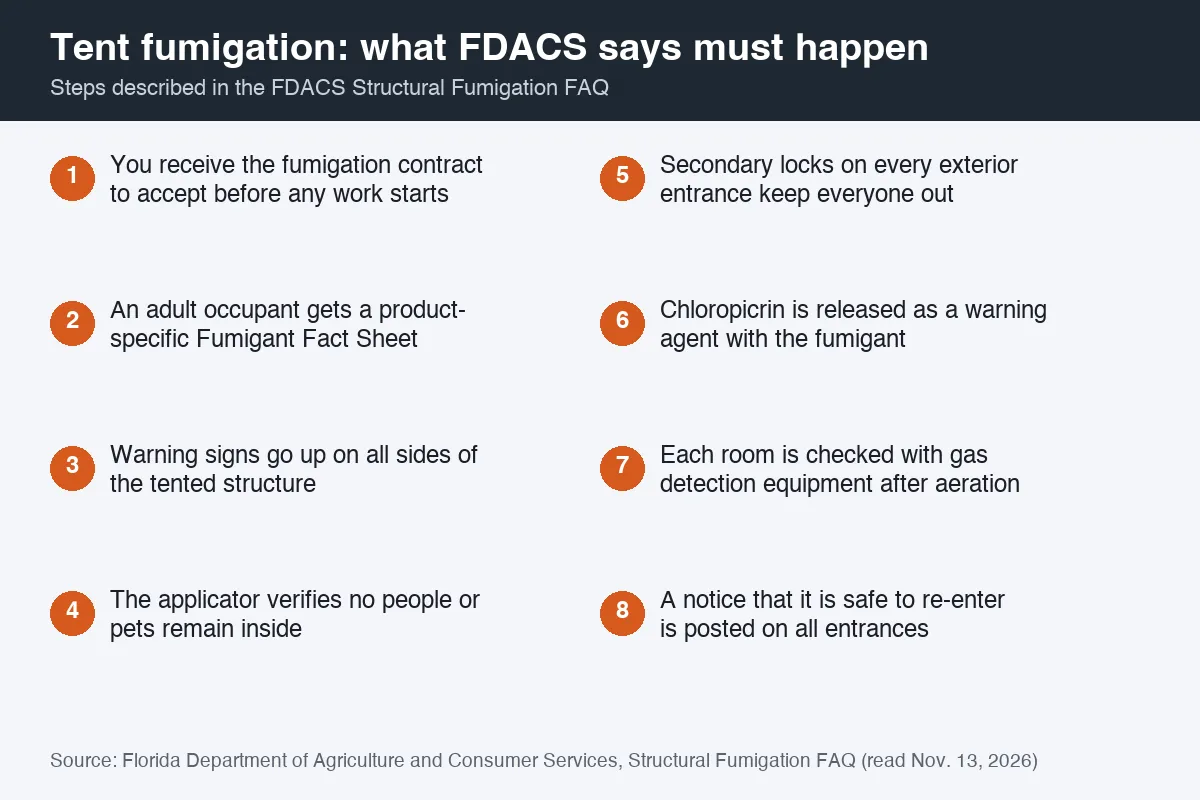
    Checklist of eight steps FDACS describes for a structural fumigation, from contract to re-entry notice
    The eight steps the FDACS Structural Fumigation FAQ describes, from the contract to the re-entry notice. Florida Pest Control Pro graphic.
    • Before: the company must present a copy of the fumigation contract to the owner for acceptance before any work is performed, and give a product-specific “Fumigant Fact Sheet” to an adult occupant of each structure or unit.
    • During: the certified applicator puts warning signs on all sides of the structure, verifies that no people or pets remain inside, and secures every exterior entrance with secondary locks that keep everyone, including the homeowner, out. Because sulfuryl fluoride is colorless and odorless, applicators must also release chloropicrin as a warning agent; it irritates the eyes and has a pungent odor at very low concentrations.
    • After: the applicator aerates the structure and checks each room with gas detection equipment, then posts a notice on all entrances stating that it is safe to re-enter. If you do not see that notice, FDACS says to contact the applicator and not go back in.

    The applicator will ask for a key. FDACS explains this is so they can confirm no person or pet is inside and respond quickly in an emergency.

    Ready to compare tenting quotes? Call (888) 217-7523 and say that you need a drywood termite inspection and a fumigation estimate.

    How to prepare your home for tenting

    Your certified applicator gives the instructions for your house. FDACS lists the kind of preparation you may be asked to do:

    • leave dresser drawers partially open and all interior doors open,
    • open plastic storage boxes or leave their lids ajar,
    • double-bag foods and medicines or remove them from the house,
    • trim shrubbery back so the tarps fit,
    • make sure there is separation between the house and any deck or fence posts so the tent can seal.

    Plan for the whole household to be out, including pets and houseplants: FDACS says you must vacate during fumigation and not return for any reason until the applicator says it is safe. The length of time depends on the fumigant label and on how the aeration goes, so ask the company for its schedule in writing.

    Safety questions homeowners ask about tenting

    FDACS says structural fumigants are reviewed by the U.S. EPA and by FDACS before they are registered, and that the label instructions are designed to prevent exposure to unsafe levels. It also lists symptoms of exposure to high levels of sulfuryl fluoride: respiratory irritation, nausea, excess fluid in the lungs, sleepiness, pneumonia and convulsions. If you think you are ill because of a fumigation, FDACS says to seek medical attention immediately, and to contact Florida’s Poison Control Center or your county health department.

    On residue, FDACS says modern fumigants are gases that dissipate during aeration and leave no residue on dishes, clothing or furnishings. On neighbors, it says there is no minimum distance between a fumigated house and the one next door, but connected structures require additional precautions and fumigated spaces must be made reasonably gas-tight.

    What to ask before you sign a fumigation contract

    • Which termite did you identify, and where? Can I see it on a diagram or in photos?
    • Why tenting rather than a localized or heat treatment for my house?
    • Who is the certified applicator, and what is the company’s FDACS license number?
    • What does the contract cover: drywood termites only, or other wood-destroying organisms? Is there a warranty or a renewal, and what does it cost after the first year?
    • How long will we be out of the house, and when will the re-entry notice be posted?

    You can verify the company with FDACS before signing; our guide on how to check a Florida pest control license explains the lookup. For contract wording, see what to ask before you sign a pest control agreement in Florida.

    FDACS also points out that homeowners insurance does not cover termite damage, which is one more reason to keep the inspection report and treatment contract with your house records. If you are buying or selling, our guide to reading a Florida WDO report shows where a previous fumigation would appear. For subterranean and Formosan termites, start from our page on termite control in Florida.

    Questions homeowners ask

    Is tenting the only way to get rid of drywood termites in Florida?

    No. FDACS lists structural tent fumigation for extensive infestations, along with heat treatments, localized treatments with registered termiticides or essential oils, and removal of infested wood. The inspection should explain which fits your house.

    How long do you stay out of the house after tenting?

    Until the certified applicator has aerated the house, checked each room with gas detection equipment and posted a notice on all entrances that it is safe to re-enter. Ask for the planned schedule in your contract.

    Will tenting leave residue on my dishes and clothes?

    FDACS says modern fumigants are gases that dissipate during aeration and leave no residue.

    Does tenting treat subterranean termites?

    FDACS recommends a non-repellent soil treatment or an in-ground bait system for subterranean termites. Tenting is mainly used for termites that live inside the wood, such as drywood termites.

    Does homeowners insurance pay for termite tenting?

    FDACS says homeowners insurance does not cover damage caused by termites. Check your own policy for anything specific to your home.

    Sources, consulted November 13, 2026: FDACS, Florida Structural Fumigation Information and Structural Fumigation FAQ; FDACS, Termites; FDACS, Dampwood and Drywood Termites; FDACS, Subterranean Termites. General information, not legal advice.

    Checking what is available in your area

    floridapestcontrolpro.com is a connection service. We do not perform pest control and we do not employ technicians. To check whether a participating independent provider serves your address, call the number on this page: a partner call service routes the call where a provider is available, and we may be paid when you call. Availability varies by area and by season, and you decide whether to move forward with anyone you speak to.

    To check by phone, call (888) 217-7523 and describe where you found wings, droppings or damaged wood.

  • Termite Inspection in Florida: When to Book It and What the Report Must Say

    Termite Inspection in Florida: When to Book It and What the Report Must Say

    A termite inspection in Florida is a visual check of a home for termites and other wood-destroying organisms (WDO), done by a licensed pest control company. FDACS recommends having your home inspected every year by a licensed company to protect it from subterranean termites, and when the inspection is for a home sale, Florida law sets out exactly what the written report must say. Because homeowners insurance does not cover termite damage, according to FDACS, the inspection is the main way to catch a problem before it becomes a repair bill.

    This guide explains when to book an inspection, what the inspector looks at, what a WDO report for a real estate transaction must include under section 482.226 of the Florida Statutes, what the report does not promise, and how to reach a participating company in your area.

    To check by phone whether a participating termite company serves your address, call (888) 217-7523. Florida Pest Control Pro does not perform inspections; we may be paid when you call.

    When to book a termite inspection in Florida

    • Every year. FDACS lists an annual inspection by a licensed pest control company as the first prevention step for subterranean termites on its subterranean termite page.
    • Before buying or selling a home. Whether your contract or lender requires a WDO inspection is a question for your agent; if one is made for the transaction, the rules below apply.
    • After you see signs. Mud tubes on the foundation, winged insects indoors in the evening, or discarded wings on a windowsill. FDACS says that if you see drywood termite swarmers or just their wings, you should contact a pest management professional for an inspection and an identification.
    • When your treatment contract renews. If you already have a termite contract, the inspections it specifies are part of it, and Florida law requires a signed report after them (see below).

    What the inspector looks at

    An inspection covers the visible and accessible parts of the structure. Expect the inspector to look at:

    • the foundation and slab edges, for mud tubes, which subterranean termites build to move above ground (FDACS uses them for detection),
    • the attic, roof framing, eaves, soffits and fascia, which FDACS lists as typical entry points for drywood termites,
    • window and door frames, baseboards and wood siding,
    • the crawl space, if the house has one,
    • conducive conditions: leaks, gutters and sprinklers that wet the walls, mulch against the foundation, wood touching soil.

    FDACS says termites can use cracks as thin as a credit card to get into a structure, so cracks in the foundation and around the exterior are noted too.

    What a Florida WDO report must include

    When a licensee inspects for wood-destroying organisms for a real estate transaction and either charges a fee or is asked for a written report, section 482.226 requires a WDO inspection report on a form prescribed by the department. The inspection must cover all wood-destroying organisms, and the licensee must keep a copy for at least 3 years.

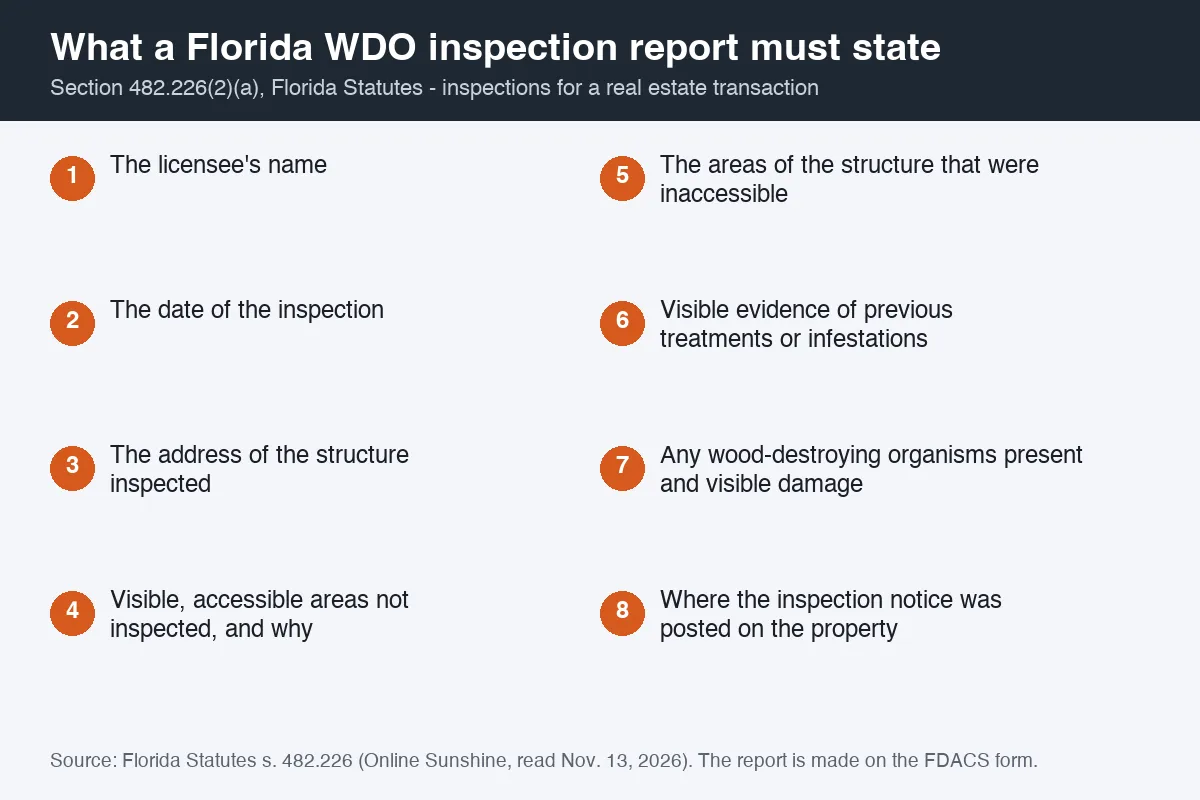
    Checklist of the eight items a Florida WDO inspection report must state under section 482.226
    The eight items section 482.226(2)(a) requires on a WDO report made for a real estate transaction. Florida Pest Control Pro graphic.
    The report must state Why it matters to you
    The licensee’s name and the date of the inspection Lets you verify the company and how recent the findings are
    The address of the structure inspected Confirms which building was covered (a detached garage or shed may not be)
    Visible, accessible areas not inspected, and the reasons Shows what was skipped and why, such as stored items blocking a wall
    Areas of the structure that were inaccessible Tells you where nobody could look, such as a sealed attic
    Visible evidence of previous treatments or infestations Reveals history the seller may not have mentioned
    Wood-destroying organisms present and visible damage The core finding: what was seen, and where
    A statement that the inspection notice was posted, and where Lets you find the notice on the property

    The report must also certify that neither the inspector nor the licensee has any financial interest in the property or any role in the transaction other than the inspection. If a treatment was done at the time of the inspection, the report must name the organisms treated, the pesticide used and the conditions of that treatment. Our step-by-step guide to reading a Florida WDO report (FDACS Form 13645) walks through the form section by section.

    What the report does not promise

    Section 482.226 is clear that an inspection report is not a guarantee that there are no wood-destroying organisms or damage, unless the report specifically states the extent of such a guarantee. The inspection is visual, limited to what was accessible on that day. If the report lists inaccessible areas, ask whether they can be opened up for a second look before closing on a house.

    Need an inspection before a closing date? Call (888) 217-7523 and mention the date you need the report by.

    The notice in your attic or crawl space

    After a WDO inspection for a real estate transaction, Florida law requires the licensee to post a notice next to the access to the attic or crawl area, or another readily accessible area. It must be at least 3 by 5 inches, made of a material that lasts at least 3 years, and show the licensee’s name and address and the date of inspection. A separate notice is required after any treatment for wood-destroying organisms, stating the pesticide used and the organism treated. Only the property owner may remove these notices.

    If you are buying a home, look for these notices during your walk-through. They are a quick record of past inspections and treatments.

    Who can inspect, and how to check them

    Section 482.226 says a person may not perform inspections or treatments unless they hold an identification card issued under chapter 482, and that licensees performing WDO inspections for real estate transactions must carry errors and omissions insurance or a bond of no less than $500,000 in the aggregate and $250,000 per occurrence, or show an equivalent net worth. Ask to see the inspector’s identification card. Our guide on checking a Florida pest control license explains how to look up the company with FDACS.

    If the inspection finds termites

    FDACS says it is very important to identify the type of termite, because treatments vary with the type. Subterranean termites are usually treated with a non-repellent soil barrier or an in-ground bait system around the home; drywood termites may call for tent fumigation, heat or localized treatments. Our page on termite control in Florida covers the next steps.

    Questions homeowners ask

    Does Florida require a termite inspection to sell a house?

    Section 482.226 does not require an inspection for every sale; it governs the report when a licensee inspects for a real estate transaction and charges a fee or is asked for a written report. Your purchase contract or lender may ask for one, so check with your agent.

    How often should a Florida home be inspected for termites?

    FDACS recommends an annual inspection by a licensed pest control company as part of preventing subterranean termites.

    Is a clean WDO report a guarantee?

    No. The statute says a report is not a guarantee of the absence of wood-destroying organisms or damage unless it specifically states the extent of a guarantee.

    How long does the company keep my inspection report?

    For WDO inspections made for a real estate transaction, the licensee must keep a copy for at least 3 years.

    Does homeowners insurance cover termite damage in Florida?

    FDACS says homeowners insurance does not cover damage caused by termites.

    Homeowners in Lee County and Alachua County can also start from our Cape Coral pest control page or our Gainesville page.

    Sources, consulted November 13, 2026: Florida Statutes, section 482.226 (Online Sunshine); FDACS, Termites; FDACS, Subterranean Termites; FDACS, Dampwood and Drywood Termites. General information, not legal advice; statutes can change.

    Checking what is available in your area

    floridapestcontrolpro.com is a connection service. We do not perform pest control or inspections and we do not employ technicians. To check whether a participating independent provider serves your address, call the number on this page: a partner call service routes the call where a provider is available, and we may be paid when you call. Availability varies by area and by season, and you decide whether to move forward with anyone you speak to.

    To check by phone, call (888) 217-7523 and say whether the inspection is for a home sale or for your own house.

  • How to Check a Florida Pest Control License (FDACS)

    Short answer: pest control companies in Florida are licensed by the Florida Department of Agriculture and Consumer Services (FDACS). You can check a company or a person online through the FDACS AES Licensing Portal or its pest control database search, or by calling the FDACS licensing line listed on its “How do I know if a pest control company is licensed?” page. A licensed company has a business license number that starts with “JB”, marked service vehicles, and employees who carry identification cards.

    This guide walks through what to look up, what to ask for at the door, and what to do if something does not add up. Everything below comes from FDACS consumer pages, consulted on November 6, 2026.

    Why the license check matters

    FDACS regulates and licenses the pest control industry under Chapter 482, Florida Statutes. The department warns that unlicensed operators usually do not carry insurance and may misuse pesticides, which can leave a homeowner with a costly cleanup. A license check takes a few minutes and is worth doing before anyone treats your home, and before you sign a termite or general pest agreement.

    Step 1: look the company up online

    FDACS points consumers to two tools:

    Search by the business name exactly as it appears on the estimate, the contract or the truck. If the name you were given does not appear, ask the company for its business license number and search again. If you would rather talk to someone, the FDACS page above gives the department’s licensing phone line and office hours.

    Step 2: ask for the business license

    According to FDACS, the state issues a numbered pest control business license to each active company every year, and you can ask the company for a copy. Pest control business license numbers begin with the prefix “JB”. A license number that does not start with JB, or a company that will not show its license, is a reason to stop and check before going further.

    Step 3: check the truck and the ID card

    • Service vehicles. FDACS says service vehicles must be permanently marked on both sides with the company’s business name as registered with the department. Sales vehicles that carry no pesticides or service equipment must also be marked, but they may use a temporary marking such as a magnetic sign.
    • Identification cards. Employees hold pest control identification cards, and FDACS notes that moonlighting by cardholders is prohibited by law. Certified applicators receive a numbered card that they carry on their person; FDACS suggests consumers ask to see it.
    • Wildlife trappers. If someone is removing rodents for you as a wildlife trapper, FDACS notes that wildlife trapper certificate numbers begin with “LW”.

    Step 4: match the license to the job

    Florida licenses pest control by category. As our guide to questions to ask before signing a pest control agreement explains, UF/IFAS lists general household pest control, termites and other wood-destroying organisms, lawn and ornamental, and fumigation, and companies need a certified operator in each category they offer. For a termite job or a real-estate termite inspection, ask specifically about the termite category. A real-estate wood-destroying organism inspection is reported on the state form FDACS-13645; see how to read a Florida WDO report.

    Step 5: look at complaint history

    FDACS says a pest control company’s complaint history is public information and that it reviews written complaints from the last three years. If you have a problem with a company, FDACS suggests first asking to speak with the certified pest control operator or the branch manager directly. To start an investigation, a written complaint must be filed on the department’s form; anonymous complaints are investigated at a lower priority. The complaint form is linked from the FDACS pest control section.

    Payment red flags FDACS mentions

    • A request to make a check payable to cash or to an individual rather than the company.
    • Any “under the table” payment arrangement.
    • Payments you made that do not show up on the company’s statements; FDACS advises checking your statements, since route payments can be pocketed.

    Questions homeowners ask

    How do I check a pest control license in Florida?

    Use the FDACS AES Licensing Portal or the FDACS pest control database search, or call the licensing line listed on the FDACS consumer page. Search by the exact business name, then compare the license number with the one the company gives you.

    What does a Florida pest control license number look like?

    According to FDACS, pest control business license numbers begin with “JB”. The license is issued every year to each active company, and you can ask for a copy.

    Do pest control technicians in Florida carry ID?

    Yes. FDACS says employees hold pest control identification cards, and certified applicators carry a numbered card. You can ask to see it before work starts.

    Can I see complaints against a pest control company?

    FDACS says complaint history is public information. It reviews written complaints from the last three years.

    About this site

    Florida Pest Control Pro is an information website, not a pest control company: it does not hold a pest control license, inspect or treat homes. Its phone number connects you with a partner call service that checks whether a participating independent provider serves your ZIP code, and we may be paid when you call. Whoever you speak with, through this site or not, the checks above apply. More on how this site works, and on termite control in Florida.

    Sources, consulted November 6, 2026: FDACS, “How do I know if a pest control company is licensed?”; FDACS, Pest Control FAQ (complaint history, identification cards, wildlife trappers); FDACS form 13645; UF/IFAS Extension, as cited in our contract guide.

  • Formosan Termite Swarms in Florida: What to Do That Evening

    It happens on a warm, still evening, usually after rain. The porch light is suddenly covered in winged insects, a few dozen find their way inside, and by morning there are wings on the windowsills. In parts of Florida, that scene can be a Formosan subterranean termite swarm, and the first evening is when most people make their decisions about it.

    Swarm season is months away as this is written. That makes now the useful time to learn what a swarm means, what to do that night, and which preparations make the next season less stressful.

    What a Formosan swarm is

    The Florida Department of Agriculture and Consumer Services (FDACS) runs a Formosan Termite Program and publishes a consumer FAQ that answers most of what homeowners ask. Like all termite species, Formosans send out winged reproductives, called alates, to find new territory and start new colonies. According to FDACS, Formosan alates are golden brown with small hairs all over their wings and fly in massive swarms from April to July (FDACS, Formosan Termite Consumer FAQ).

    The timing is specific. FDACS says swarms typically emerge between 8 and 10 p.m. on evenings with low winds and high humidity, especially after rain, and that the swarmers are attracted to white light.

    Formosans are subterranean termites. According to FDACS, they live primarily underground and favor dark, moist, hidden environments, which they can also find in walls, attics and trees. FDACS notes that their colonies can extend as deep as the water table.

    What to do that evening

    Turn off the lights

    Because swarmers are drawn to white light, FDACS recommends turning outside lights off, or switching to yellow bug lights, if you see a swarm. Indoors, the same logic applies to lamps near windows and doors. Formosans come in through windows, doors, exhaust fans and attic openings.

    Vacuum the ones inside

    FDACS’s instruction is direct: swarmers in the house should be vacuumed up and disposed of as soon as possible. The department adds that ninety-nine percent of swarmers die within a few hours if they find no moisture.

    Notice where they are coming from

    This is the observation that matters most for what happens next. FDACS draws a clear line between two situations:

    • In a neighborhood that is highly infested, you should expect to see a few to 100 swarmers in the house during swarm season. FDACS says the presence of a few swarmers does not necessarily mean your home is infested.
    • If the home itself is infested and the colony is in the walls or attic, FDACS says you would see several hundred to thousands of swarmers in the house, and the termites can chew through and break out of walls and ceilings.

    So before you vacuum everything, take a moment to note whether the insects are gathered at windows and doors, which suggests they flew in, or whether they seem to be emerging from a wall, a ceiling, a baseboard or a crack in the slab. A few clear photos and a note of the time and rooms will help whoever inspects the house later.

    Do not reach for a spray can

    FDACS strongly recommends that homeowners do not treat for termites themselves, because they do not have access to current bait systems, chemicals and the equipment needed to treat under a home’s foundation. The department advises using a licensed pest control company instead, and you can confirm a company’s license through the FDACS pest control section. When a licensed company recommends fumigation, see what FDACS requires before termite tenting.

    Why Formosans get attention other termites do not

    Three details from the FDACS materials explain why a Formosan swarm is taken seriously.

    • They get through small gaps. FDACS says Formosans cannot chew through concrete but can displace small grains of it, and they exploit cracks the thickness of a credit card to get through slabs. They have been known to chew through, but not eat, soft metals, PVC pipe and rubber.
    • They can live above ground. FDACS describes aerial colonies, which have no connection to the ground. These form when swarmers find a cellulose food source, a moisture source such as a pipe or roof leak, and a hidden space.
    • They nest in trees. According to FDACS, Formosans can infest live, healthy trees, and trees close to a house can act as a reservoir that needs to be checked by a licensed pest control company or a certified arborist.

    The aerial colony point is the one homeowners tend to overlook. A slow roof leak or a dripping line in an attic is not only a water problem in a Formosan area. It can be the moisture source a colony needs.

    Preparing before the next season

    FDACS publishes a prevention list on its Formosan Termite Prevention and Protection page. The practical items are:

    • Have the home inspected annually by a licensed pest control company.
    • Keep gutters clean, and extend gutter and drainage systems at least 1 foot away from the home.
    • Take care not to disturb the termite treatment around the foundation.
    • Repair cracks in the foundation and around the exterior, and repair any leaks in or around the home immediately.
    • Eliminate wood-to-soil and stucco-to-soil contact, and keep plant material away from the exterior and foundation.
    • Direct sprinklers away from the house.
    • Turn off porch lights or use a yellow bug light during swarm season.

    Several of these overlap with what inspectors call conducive conditions, which we cover in more detail in our article on conducive conditions around a Florida foundation. Our termite control page describes what an inspection typically looks at.

    Questions homeowners ask

    When do Formosan termites swarm in Florida?

    FDACS says Formosan swarms occur from April to July, typically between 8 and 10 p.m. on evenings with low winds and high humidity, especially after rain.

    Do a few swarmers in the house mean my home is infested?

    Not necessarily. FDACS says that in a highly infested neighborhood a few to 100 swarmers indoors is to be expected during the season, while an infested home would see several hundred to thousands. Where they appear to come from matters as much as how many there are.

    Should I spray the swarm?

    FDACS strongly recommends against treating for termites yourself. Vacuuming the swarmers that come inside and turning off lights are the steps the department describes for the evening itself.

    Can Formosan termites get through a concrete slab?

    They cannot chew through concrete, according to FDACS, but they can work small grains loose and use cracks as thin as a credit card to get through slabs and structures.

    If swarmers appeared inside rather than at the windows, the broader warning signs on our page about when a pest problem needs a professional are a reasonable next read. Homeowners on the southwest Gulf coast can also start from our Sarasota area page.

    Checking what is available in your area

    floridapestcontrolpro.com is a connection service. We do not perform pest control and we do not employ technicians. To check whether a participating independent provider serves your address, call the number on this page: a partner call service routes the call where a provider is available, and we may be paid when you call. Availability varies by area and by season, and you decide whether to move forward with anyone you speak to.

  • How to Read a Florida WDO Report (FDACS Form 13645)

    If you are buying a house in Florida, a wood-destroying organism report usually arrives a few days before closing, often as a two-page PDF forwarded by a lender or an agent. Most people look for one thing, a checked box near the top, and stop reading. That is the part of the report that tells you the least. If you have not booked one yet, see when to schedule a termite inspection in Florida.

    The document is a standard state form, FDACS-13645, the Wood-Destroying Organisms Inspection Report, issued under Rule 5E-14.142 of the Florida Administrative Code (Florida Administrative Code, Rule 5E-14.142). Because every licensed company in the state fills in the same form, you can learn to read it once and use that skill on any report you receive. The wording quoted below comes from the published form; check the revision date printed in the corner of your copy, since the department updates its forms from time to time.

    What the report is, and what it is not

    The form says plainly what it covers. It is made “on the basis of what was visible and readily accessible at the time of inspection”. It does not cover areas that are enclosed or inaccessible, or areas concealed by wall coverings, floor coverings, furniture, stored items or insulation, or anything that would require removing or defacing part of the structure.

    Two more limits are printed on the form itself. It is “NOT a structural damage report”, and it recommends further investigation by qualified experts of the building trade to determine the structural soundness of the property. It also states that the property was not inspected for any fungi other than wood-decaying fungi, and that no opinion is given on health or indoor air quality.

    The organisms in scope are defined on the form: a wood-destroying organism is an arthropod or plant life that damages and can reinfest seasoned wood in a structure, namely termites, powder post beetles, old house borers and wood-decaying fungi.

    Section 1: who inspected, and how to check them

    The first section records the inspection company, its business license number, the date, the property and structures inspected, and the inspector’s name and identification card number. Those two numbers are worth a minute of your time. FDACS regulates and licenses the pest control industry under Chapter 482, Florida Statutes, and its Pest Control section is where the department points consumers who want to confirm that a company is licensed.

    Look also at the line listing which structures were inspected. A detached garage, shed or pool house that is not named there was not covered by the report.

    Section 2: the findings

    The form labels this section “Consumers should read this section carefully”. The inspector checks one of two options.

    • A. No visible signs of WDO(s) (live, evidence or damage) observed.
    • B. Visible evidence of WDO(s) was observed, followed by three separate lines.

    Under option B, each of the three lines answers a different question, and they are easy to confuse.

    Live WDO(s)

    Active organisms were seen. The inspector writes the common name of the organism and where it was found. This is the line that most directly calls for a treatment decision.

    Evidence of WDO(s)

    The form lists what counts: dead wood-destroying insects or insect parts, frass, shelter tubes, exit holes, or other evidence. Evidence tells you an organism was there at some point. On its own it does not tell you whether the activity is current or historical, which is why the next sections of the report matter so much.

    Damage caused by WDO(s)

    Visible damage was noted, with a description and location. Remember the form’s own limit here: the inspector is recording what can be seen, not measuring how far the damage extends inside the framing. If this line is filled in, the form’s recommendation to involve a building-trade expert applies directly to you.

    Read the three lines together. Evidence with no live organisms raises a question about treatment history. Damage with no live organisms raises a question about repairs. Live organisms raise both.

    Section 3: what the inspector could not see

    This is the section most buyers skip, and it can change the meaning of everything above it. The form states that “NO INFORMATION on the status of wood-destroying organisms or damage from wood-destroying organisms in these areas is provided in this report.”

    The inspector lists specific areas under attic, interior, exterior, crawlspace and other, with a reason for each. A report with “no visible signs” in Section 2 and a long list in Section 3 is a much narrower result than it first appears. A finished attic with no access, a garage packed to the ceiling, or a wall lined with built-ins can all hide the places where termites usually show up.

    If something listed here could be made accessible, such as boxes that could be moved or a hatch that could be opened, it is reasonable to ask whether a follow-up visit can cover it before closing.

    Section 4: previous treatment and the notice

    The inspector records whether there was evidence of previous treatment and what was observed. The form adds an important note: the inspecting company can give no assurances about work done by other companies, and the company that performed the treatment should be contacted for its treatment history and any warranty or service agreement that may be in place. If the earlier treatment was a fumigation, our guide to termite tenting in Florida explains each step from contract to re-entry.

    In practice that means asking the seller which company treated the house, when, for which organism, and whether any agreement transfers to a new owner. The same section records where a Notice of Inspection was affixed to the structure and where it is located, and whether the inspecting company treated the structure at the time of inspection, with the organism, the pesticide and the method.

    Anything written in the comments at the end of the report deserves the same attention as the checkboxes. That space is where an inspector can explain a finding or a limitation in plain words.

    Questions to bring back to the inspector

    • For each item under evidence, do you believe the activity is current or old, and what makes you think so?
    • Which areas listed under Section 3 could be inspected if they were made accessible?
    • Was evidence of previous treatment consistent with the organism you found?
    • Would you recommend that a contractor or engineer look at any of the damage you noted?
    • Were there conditions, such as wood touching soil or moisture against the foundation, that you noticed but that are outside the scope of this form?

    That last question matters because conditions that attract termites are not the same thing as termites. Our article on conducive conditions around a Florida foundation explains what those conditions look like, and our termite control page covers what an inspection and treatment usually involve.

    Questions homeowners ask

    Is a WDO report the same as a home inspection?

    No. The form itself says it is not a structural damage report and limits its scope to wood-destroying organisms that were visible and accessible on the inspection date. A general home inspection is a separate service with a separate scope.

    Does “no visible signs” mean the house has no termites?

    It means the inspector saw no live organisms, evidence or damage in the areas that were visible and readily accessible that day. It says nothing about the areas listed in Section 3, and the form states that it is not to be read as proof of absence.

    Who can perform a WDO inspection in Florida?

    The form is completed by a licensed pest control company and records both the business license number and the inspector’s identification card number. You can confirm the company through the FDACS pest control resources linked above.

    What should I do if the report shows evidence but no live termites?

    Ask about treatment history, both from the inspector and from the seller. If a company treated the house, its records and any service agreement are the most direct way to understand whether the evidence is old. If you are deciding whether to sign an agreement of your own afterward, our guide to questions to ask before signing a pest control agreement covers the terms worth settling first.

    Buyers in North Florida ask these questions as often as anyone, and our Tallahassee area page describes how matching works in that part of the state.

    Checking what is available in your area

    floridapestcontrolpro.com is a connection service. We do not perform pest control and we do not employ technicians. To check whether a participating independent provider serves your address, call the number on this page: a partner call service routes the call where a provider is available, and we may be paid when you call. Availability varies by area and by season, and you decide whether to move forward with anyone you speak to.

  • What to Ask Before You Sign a Pest Control Agreement in Florida

    Most people compare pest control companies on the wrong document. The sales conversation is where the reassurance happens, but the agreement is what actually governs the next twelve months: how often someone comes, what they are responsible for, what ends the arrangement, and what you are expected to do in return.

    This is not about what a plan costs. It is about the terms, and about the questions that surface problems before you sign rather than four months in. UF/IFAS Extension published a homeowner’s guide to selecting a pest control service in Florida, and its central instruction is worth taking literally: “The key is to ask a lot of questions” (UF/IFAS Extension, ENY-2043 Homeowner’s Guide to Selecting a Pest Control Service).

    Confirm the company is operating legally before anything else

    UF/IFAS notes that illegal pest control operators are increasingly common in Florida and elsewhere. It also gives homeowners a way to check for themselves: the Florida Department of Agriculture and Consumer Services maintains a publicly searchable database of pest control licensees, and the guide walks through the search step by step. An operator working legally shows as active in that record.

    The guide adds several things to observe during an in-person visit. The person should be able to present a state identification card on request, and give you a business telephone number and a business address. Florida requires all salespeople, office staff and technicians to carry that card. The guide also mentions a rule most homeowners have never heard: by law, the vehicle driven by the person performing the pest control work must not use magnetic signage, since only sales vehicles may do that.

    One more question from the same source, and it is the sharpest one on the list: ask the person inspecting your home for the name of their certified operator in charge. UF/IFAS defines that person as someone who has passed a state examination in a specific pest control category and who supervises the technicians doing the work, and it says plainly that if the inspector cannot name that person, it should be a concern.

    The inspection should come before the proposal

    UF/IFAS is specific that recommendations and quotes should be based on an inspection of your home, and warns against companies that produce a proposal from the size of the house alone. A real inspection looks, in the guide’s phrasing, in, under, around, behind and on top of the places pests hide.

    Two practical follow-ups. If you do not know how to recognize an infestation or the damage it leaves, ask the inspector to show you what they are looking at. And ask who will actually be at your door on service day, because some companies send a salesperson for the assessment and a different technician for the work.

    Terms to have answered in writing

    The guide lists the questions pest management professionals themselves suggest homeowners ask. Written down, they make a usable checklist:

    • How long is the agreement, how often is service performed, and what is the stated response time between visits if something comes up
    • What guarantees or warranty terms, if any, apply
    • What will void the agreement
    • How are service records kept, and can you get to them
    • How does scheduling work, will anyone contact you to narrow the arrival window, and do you need to be home
    • What is the company’s training policy for keeping technicians current
    • Is the company a member of a recognized professional association

    The question about what voids the agreement is the one worth pushing on, particularly for termite coverage. Conditions around the structure can affect a warranty: UF/IFAS notes elsewhere that moisture is a conducive condition that can void some termite warranties, and that irrigation aimed at a wall falls into that category (UF/IFAS Extension, ENY-2044 Termite Prevention and Control). Landscaping decisions made a year after signing can quietly change your position.

    Ask whether the plan is built on integrated pest management

    UF/IFAS suggests asking directly whether the company uses an integrated pest management approach, and describes what such a plan is designed to do: stop pests, inspect and monitor for pests, identify pests, and treat for pests only as needed. It adds two structural details. An IPM plan should include monitoring and prevention, with monitoring devices placed so that pest activity is detected rather than guessed at. And a good plan includes regular evaluation to determine whether it is working.

    That last point is the difference between a service plan and a subscription. If nothing in the agreement describes how anyone decides the plan is succeeding, there is no mechanism for it to change.

    How the product will be applied

    The guide frames this in terms of exposure rather than chemistry: risk is related to exposure, broadcast applications carry the highest level of risk, and targeted approaches such as crack and crevice treatments or baits carry the lowest. Two reasonable questions follow from that. What application method is planned for your house, and is any cleanup of residue required afterward. UF/IFAS notes that required cleaning of residue should be rare when an integrated approach is used.

    It also sets an expectation that trims a common request. Pest management professionals are constrained by law in how pesticides may be applied, and the guide states outright that they will not be able to accommodate a request to spray everything.

    Ask what you will be expected to do

    Preparation is part of the agreement even when it is not written into it. UF/IFAS lists the questions to raise before the first visit: what do you need to do to prepare the home, will you, your family and pets need to leave during the service, and if so for how long, and do you need to move furniture or turn off irrigation.

    There is a longer-term half too. The guide lists home maintenance tasks that homeowners are commonly asked to follow up on, and they read as the homeowner’s half of a plan that works:

    1. Seal gaps around doors and windows. The guide offers a test worth using: if you can see light through a gap from the inside, it is enough space to let in large cockroaches, other insects, spiders and even rodents and snakes.
    2. Make sure irrigation is not directed at the walls of the home, since moisture encourages infestations and can affect indoor air quality.
    3. Remove tree and shrub branches touching exterior walls or the roof, which rodents and ants commonly use as a route in.
    4. Clear yard debris where pests harbor and breed, and eliminate or regularly empty water-holding containers.
    5. Remove cardboard boxes, store books and paper in sealed containers, and keep food, including pet food, in sealed containers.

    If a company never mentions any of this, that is information about the plan. UF/IFAS frames the relationship as a partnership and a long-term commitment rather than a transaction, and expects a professional to work with you on how the pests became a problem and how to prevent the next one.

    Termites and wood-destroying organisms are a separate category

    Florida licenses pest control by category. UF/IFAS lists general household pest control, termites and wood-destroying organisms, lawn and ornamentals, and fumigation, and notes that companies must have a certified operator in each category they offer. A general pest agreement does not imply termite coverage, and the two are usually separate documents with separate terms.

    For structural coverage, UF/IFAS treats an annual renewal inspection as part of ordinary home maintenance, performed by someone trained to recognize evidence of termites and potential problems. Our page on termite inspections and what they look for covers what that visit typically involves, and the overview of rodent activity in and around a home shows why the general household category and the structural one often get discussed in the same conversation.

    Before you sign

    UF/IFAS keeps this part short. Make sure you have a written quote listing the services provided. Read and understand the entire contract, including all terms and conditions, before signing, and have anything unclear explained. Do not feel pressured to sign up for special deals.

    Two questions of your own are worth adding. What happens if the pest is still active after the first visit, and what is the process for ending the agreement. Both are easier to ask now than to research later. If you are still deciding whether a plan is warranted at all, our comparison of doing it yourself versus hiring a professional is the earlier decision.

    Homeowners along the central Gulf coast ask these questions constantly given the pest pressure there, and our St. Petersburg area page describes how matching works in that part of the state.

    Checking what is available in your area

    floridapestcontrolpro.com is a connection service. We do not perform pest control and we do not employ technicians. If you would like to be matched with participating providers based on your service area, you can use the request form on this page. Availability varies by area and by season, and you decide whether to move forward with anyone you speak to.

  • How Bed Bugs Reach a Florida Home, and Where to Look First

    Bed bugs are the one household pest that has almost nothing to do with how a home is kept. They do not come up from the yard, they are not drawn in by crumbs, and they are not a sign that anything went wrong. They arrive on things people carry. Florida moves an enormous number of visitors, seasonal residents, students and second-hand furniture around every year, and that traffic is the whole mechanism.

    Because of that, the two skills that matter are knowing how they travel and knowing where to look. Both are unglamorous, and both work far better when the population is still small.

    They move on objects, not on their own

    The EPA is direct about it: “Bed bugs are great hitchhikers. They can move from an infested site to a new home by traveling on furniture, bedding, luggage, boxes and clothing” (US EPA, Protecting Your Home from Bed Bugs). The same page notes that although they typically feed every five to ten days, they are capable of surviving several months to a year without feeding.

    That second detail is the one people underestimate. A sofa that has been sitting in a storage unit, a suitcase that spent the off-season in a closet, a box of books from a relative’s house that nobody opened for eight months. None of those are safe by virtue of time passing.

    Do not diagnose this from bites

    Almost everyone starts here, and it is the least reliable place to start. EPA guidance states that “Bites on the skin are a poor indicator of a bed bug infestation,” because the marks can look like bites from mosquitoes or chiggers, like a rash such as eczema or a fungal infection, or even like hives. Some people do not react to the bites at all (US EPA, How to Find Bed Bugs).

    Misidentification also costs time. Carpet beetles get mistaken for bed bugs constantly, and EPA points out that a wrong call gives an actual infestation more room to spread through a house or hitch a ride to someone else’s.

    The physical signs that mean something

    EPA lists what to look for when you are changing bedding, cleaning, or staying somewhere away from home:

    • Rusty or reddish stains on sheets or mattresses, caused by bed bugs being crushed
    • Small dark spots, which are excrement, and which can bleed into fabric the way a marker would
    • Eggs and eggshells, roughly a millimeter across, and the pale yellow skins nymphs shed as they grow
    • Live bed bugs

    The dark spotting is usually the first thing a careful person finds, and it tends to show up in lines or clusters along a seam rather than scattered at random.

    Where to actually look

    Around the bed, EPA points to the piping, seams and tags of the mattress and box spring, and to cracks in the bed frame and headboard. That is the short list, and in a low-level infestation it is often the whole list.

    If a room is heavily infested, the search widens considerably. EPA names the seams of chairs and couches, the space between cushions, the folds of curtains, drawer joints, electrical receptacles and appliances, the area under loose wallpaper and wall hangings, the junction where wall meets ceiling, and even the head of a screw. The reason it goes that far is a matter of size: “Since bed bugs are only about the width of a credit card, they can squeeze into really small hiding spots. If a crack will hold a credit card, it could hide a bed bug.”

    Behavior that tells you where to search next

    A few points from EPA’s summary of bed bug habits change how you inspect a room:

    • They will readily travel five to twenty feet from an established hiding place, called a harborage, to reach a host. A nightstand, a nearby armchair and the baseboard behind the headboard are all inside that radius.
    • They are primarily active at night, but if hungry they will seek hosts in full daylight. Daytime activity does not rule them out.
    • Feeding takes three to twelve minutes, which is why people almost never notice it happening.
    • They can survive and stay active at temperatures as low as 46 degrees Fahrenheit, and they die when their body temperature reaches 113 degrees Fahrenheit. EPA adds that killing them with heat requires the room to be hotter still, so that sustained heat reaches them wherever they are hiding.

    That last point is worth holding on to, because it explains why leaving a suitcase in a hot car or a closed Florida garage is not a method. The temperature that matters is the one reached inside the object, sustained, not the one on the dashboard.

    Habits that keep them out

    EPA’s prevention list is short and mostly behavioral:

    1. Check second-hand furniture, beds and couches for signs of infestation before bringing them into the house. Florida’s resale and curbside furniture market makes this the single highest-value habit on the list.
    2. Use a protective cover that encases the mattress and box spring, which removes many hiding places. EPA suggests buying a good quality encasement that resists tearing, notes that a light-colored cover makes bugs easier to see, and advises checking it regularly for holes.
    3. Reduce clutter, which reduces hiding places.
    4. Vacuum frequently, to pick up anything that made it in.
    5. Be careful with shared laundry facilities. EPA suggests transporting items in plastic bags, removing them from the dryer straight into a bag, and folding at home, noting that a dryer on high heat can kill bed bugs.

    When traveling, the practical version is to inspect the luggage rack in a hotel room, keep bags off the bed and off upholstered furniture, and look at the mattress piping and the headboard area before unpacking. It takes about two minutes and it is the difference between finding a problem in someone else’s room and finding it in yours.

    If you live in a multi-family building

    Condos, apartments and duplexes make up a large share of Florida housing, and EPA has specific advice for isolating a unit: install door sweeps on the bottom of doors to discourage movement into hallways, and seal cracks and crevices around baseboards, light sockets and similar openings to discourage movement through wall voids. Those steps do not treat an infestation. They limit how easily one travels between units, which matters when the source is not yours to fix.

    Why this one rarely stays a homeowner job

    Nearly every other household pest gives you a fair chance of resolving it with cleaning, exclusion and patience. Bed bugs are harder for a specific structural reason: the hiding places are numerous, tiny and distributed across furniture, walls and fittings, and missing a small share of them lets the population rebuild. EPA’s own framing is that finding an infestation early, while it is still minor, is far less costly and far easier than dealing with the same infestation once it has spread.

    If you are weighing what to attempt yourself, our comparison of handling a pest problem yourself versus bringing in a professional lays out where the line usually sits, and the guide to signs that a pest problem has outgrown a homeowner covers the general warning signs across pests.

    Before anyone treats a room

    Two things are worth doing first. Confirm the identification, ideally by keeping an actual specimen rather than a photograph. And write down where each sign was found, because that map is what an inspection builds on and it is far harder to reconstruct from memory a week later.

    When comparing companies, ask each one to confirm license status and insurance coverage, ask how they will inspect rather than only how they will treat, ask what preparation is expected of you, and ask what happens on a follow-up visit. Bed bug work is rarely a single appointment, and how the follow-up is defined matters more than anything said on the first call. Homeowners and renters in the larger metro areas run into this most often, and our Miami area page and Tampa area page outline how matching works in those regions.

    Checking what is available in your area

    floridapestcontrolpro.com is a connection service. We do not perform pest control and we do not employ technicians. If you would like to be matched with participating providers based on your service area, you can use the request form on this page. Availability varies by area and by season, and you decide whether to move forward with anyone you speak to.

  • Conducive Conditions Around a Florida Foundation

    Most of what decides whether a Florida home develops a pest problem happens in the two‑foot strip of soil that circles the foundation. Not inside the kitchen or attic—outside, where mulch meets siding and sprinkler spray hits the wall.

    Pest professionals call the issues in that band conducive conditions. The term separates the pest itself from the environment that lets it thrive next to your house. Fixing the environment, not just treating the pest, breaks the cycle that leads to endless repeat treatments.

    What a conducive condition actually is

    At its core, a conducive condition provides moisture, food, or cover that hides early signs of activity. UF/IFAS Extension’s termite guide sums up prevention in three steps: minimize moisture, minimize food sources, and make the home easy to inspect (UF/IFAS Extension, ENY-2044 Termite Prevention and Control).

    Those principles apply to more than termites. Damp soil and wet wall bases attract ants, cockroaches, and wood‑decay fungi just as readily as subterranean termites. When you cannot see the foundation, you cannot spot problems early, and neither can a professional.

    Mulch: depth matters much more than the bag it came in

    Many Florida homeowners wonder whether bagged mulch brings termites onto a property. UF/IFAS research shows the greater risk comes from termites already on the lot, not from occasional stragglers in mulch (UF/IFAS Extension, ENY-832 The Facts About Termites and Mulch).

    What does matter is how thick the layer is and how close it sits to the wall. The same publication recommends a thin layer—under two inches—within twelve inches of the foundation so the soil underneath can dry naturally. As the guide notes, “Desiccation is the termites’ worst enemy.”

    Mulch piled thicker than four to six inches creates two problems at once. It holds moisture and moderates temperature, helping established termite colonies survive, and it buries the visual inspection zone along the outside foundation.

    Switching to gravel is not the shortcut it looks like

    Seeing that mulch retains moisture, some homeowners replace it with rock or pea gravel. UF/IFAS notes that in the studies it cites, subterranean termites actually consumed more cardboard in monitoring stations under pea gravel than under shredded hardwood bark, pine bark nuggets, or shredded eucalyptus. Inorganic ground cover is a design choice, not a termite barrier, and the publication stresses that any protective measures must still be maintained.

    The inspection space, and why people lose it by accident

    UF/IFAS advises keeping at least six inches of clear foundation between the bottom of the wall siding and the soil or mulch line. The goal is not tidiness; it is visibility. Subterranean termites build mud tubes up the exterior of a foundation to reach wood, and a six‑inch exposed band lets anyone standing in the yard spot those tubes.

    That band disappears slowly—a raised flower bed here, an extra load of mulch there, a row of shrubs set close to the wall because they looked small at the nursery. UF/IFAS also recommends landscape plants be placed at least two feet from exterior walls, with room for future growth, a step that is often overlooked.

    Water routing, one item at a time

    The termite guide’s moisture checklist reads like a simple walk‑around the house. Every item can be checked without special tools:

    • Water should flow away from the structure, not toward it.
    • Air‑conditioning drainage lines must discharge away from the house.
    • Leaks are repaired, not merely monitored.
    • Irrigation heads should be aimed away from walls.
    • Gutters need to be installed and functional so roof water is carried clear of the foundation.
    • Rain barrels, compost bins, and any ground‑level moisture holders belong at least two feet from the foundation.

    Irrigation warrants its own line because it runs on a timer whether anyone is watching. The Florida Building Code, Residential, makes this a construction requirement: Section R318.5 says condensate lines, irrigation and sprinkler risers for spray heads, and roof downspouts must discharge at least one foot away from the structure sidewall (2023 Florida Building Code, Residential, Chapter 3). The mulch publication adds that irrigation which waters the wall is “considered a conducive condition that can void termite control warranties.” If you already hold a termite agreement, a mis‑aimed sprinkler head is both a moisture problem and a potential contract issue—worth checking against your paperwork.

    Conditions that make a house hard to inspect

    Making the home easy to inspect is the third prevention pillar, and it is often compromised by well‑meaning upgrades. UF/IFAS notes that subterranean termites can tunnel through non‑food materials such as rigid foam board and spray‑foam insulation. Foam that covers the foundation also hides the mud tubes an inspector looks for. The Florida Building Code addresses the same risk for new construction: in areas mapped as having “very heavy” termite probability, Section R318.8 bars foam plastics on the exterior face of, or under, foundation walls and slabs below grade, and requires at least six inches of clearance between above-grade foam and exposed earth, subject to listed exceptions.

    That is not a reason to avoid insulating a Florida home. It is a reminder to verify, before work begins, how the change will affect your ability to see the foundation and what your existing agreement says about it.

    Wood‑to‑ground contact and the bridges nobody notices

    The same guide asks homeowners to eliminate wood‑to‑ground contact, remove loose lumber or branches, stack firewood away from protected structures, and avoid wooden landscape timbers for edging. It also advises trimming branches so they do not touch walls or roofs, because subterranean termites will use a branch as a bridge straight past any ground‑level defenses. Well‑maintained soffits and screened vents matter too, since drywood termites commonly infest soffit and attic spaces.

    The same strip of ground feeds other problems

    While the details above focus on termites—where Florida extension guidance is most specific—the conditions are not species‑specific. Saturated mulch against a slab can sustain ant colonies that move indoors when moisture levels shift, producing the trails often seen along baseboards after a rainy week. For more on ant entry routes, see our ants finding their way into Florida homes page.

    Persistent damp at the base of an exterior wall, or a leak feeding a wall cavity, also sustains high cockroach pressure around a home. Review the indoor side of that in our cockroach activity in and around a home overview. After a storm, all of these conditions change simultaneously, which is why pest pressure shifts around a Florida home after heavy weather is a useful companion read.

    A reasonable order of operations

    Most conducive conditions can be addressed without buying anything. Try this sequence:

    1. Walk the perimeter slowly and note any point where you cannot see six inches of clean foundation.
    2. Rake mulch back from the wall instead of adding more, and thin it where it is deep.
    3. Run each irrigation zone while you watch, then re‑aim any head that hits a wall.
    4. Follow condensate lines and downspouts to their discharge points; ensure water flows away.
    5. Move firewood, stored lumber, rain barrels, and compost bins clear of the structure.
    6. Trim branches away from the roof and walls, then inspect soffits from the ground.

    None of these actions requires a product. They remove the conditions that make repeat treatments more likely. UF/IFAS also suggests scheduling an annual inspection by a professional trained in wood‑destroying organisms, just as you would service an air conditioner. Details of what a termite inspection entails are covered on our termite activity and inspections page.

    What the Florida Building Code already requires at the foundation

    Much of the UF/IFAS advice above is also written into the 2023 Florida Building Code, Residential (8th edition), Section R318, “Protection Against Termites.” That matters for two reasons: it shows the conditions are not a matter of taste, and it tells you what a newer home should have looked like on the day it was finished.

    Code sectionWhat it requiresWhat to check today
    R318.5Condensate lines, irrigation/sprinkler risers for spray heads and roof downspouts discharge at least 1 foot from the sidewall. Gutters with downspouts are required on buildings with eaves of less than 6 inches, with limited exceptions.Where each line and downspout actually ends, and whether a spray head has been moved closer to the wall since.
    R318.7Clearance between exterior wall coverings and final earth grade of at least 6 inches, so the foundation can be inspected. Exceptions include a 4-inch inspection space above patio and garage slabs and entry areas.Mulch, soil, pavers or planters that have crept up the wall and closed that band.
    R318.6.3After construction, loose wood and debris removed from under the building and within 1 foot of it, including wooden grade stakes and forms; no wood stored in contact with the ground under the building.Old form boards or stakes left at the slab edge, and lumber stored against or under the house.
    R318.1 and R318.1.6New construction receives a termite protective treatment, and the pest control company issues a Certificate of Compliance to the building department. When soil treatment is used, a vertical chemical barrier is applied after construction, including initial landscaping and irrigation, and soil disturbed afterward is to be promptly retreated.Whether later landscaping or trenching disturbed treated soil; if so, tell whoever services your termite agreement.

    The code governs construction and permitted work, not everyday upkeep, so an owner who adds mulch is not “violating” it. But when the six-inch band disappears, the house no longer has the inspection space its builder was required to provide, and that is the condition an inspector will note.

    How these conditions show up in a termite agreement

    The UF/IFAS warning that a wall-watering sprinkler “can void” a termite warranty becomes concrete when you read the contract. Section 482.227 of the Florida Statutes requires every new contract for treatment of wood-destroying organisms to state on the first page, in bold print, whether it is offered for repair and re-treatment, for re-treatment only, or with no warranty at all. It must also say on the first page, in bold, whether there are disclaimers, limitations, conditions or exclusions on the company’s obligation to repair or re-treat, and those sections must carry bold headings (Florida Statutes, s. 482.227).

    That gives you a simple method: find the bold headings, and read them against the list in this article. Moisture at the foundation, wood-to-ground contact, landscaping changes and inaccessible areas are the kinds of items that tend to appear there. The statute also bars the words “full” or “unlimited” next to “warranty” when any such condition exists. Our guide to questions to settle before signing a pest control agreement covers the rest of the contract, and if you are buying a home, our walkthrough of how to read a Florida WDO report explains how inspection findings are recorded.

    For a federal overview of prevention and treatment types, the EPA’s consumer page on termites makes the same point about keeping soil around the foundation dry.

    When it is worth getting outside eyes on it

    Visible mud tubes on a foundation wall, damaged or softened wood, a wall base that never dries out, or a slab edge you cannot see are all reasons to call in a qualified inspector. When you do, ask the company to confirm its license, request a clear scope of what will be inspected, and inquire which conducive conditions they recommend correcting first. Homeowners on Florida’s southwest coast contend with a high water table and frequent rain, making these steps especially relevant; our Cape Coral area page explains how matching works there.

    When the damp area is inside the house rather than along the foundation, the first question is whether it comes from condensation or from an actual leak, because the fix is not the same.

    Frequently asked questions

    How often should I check my foundation for conducive conditions?

    A quick visual walk‑around each season is a good habit. After heavy rain, after irrigating, or whenever you notice changes in landscaping, take a few minutes to look for standing water, mulch buildup, or vegetation too close to the wall.

    Can I use rubber mulch or decorative stone instead of organic mulch?

    Both options can reduce organic matter that retains moisture, but they still need to be kept thin and away from the foundation to allow the soil to dry and to maintain the six‑inch inspection gap. Inorganic covers do not replace proper drainage or irrigation practices.

    Does the Florida Building Code require termite treatment?

    For new construction covered by the residential code, yes. Section R318.1 requires termite protection by registered termiticides, baiting systems, wood treatments or other approved methods, and a Certificate of Compliance from the licensed pest control company to the building department. It does not require existing homes to be re-treated on a schedule.

    What if I already see mud tubes or damaged wood?

    Those are signs that termites may be active. Contact a licensed inspector promptly to assess the situation and discuss appropriate next steps. Remember, we connect homeowners with local providers; we do not perform the work ourselves.

    Does spray‑foam insulation automatically disqualify me from a termite warranty?

    Not automatically. What matters is what your agreement says. Florida law requires any condition or exclusion on the company’s obligation to repair or re‑treat to sit under a bold heading in the contract, so look there for insulation, foam or inspection‑access clauses, and raise the material with your provider before any work begins.

    Sources read on October 5, 2026: UF/IFAS Extension publications ENY-2044 and ENY-832; 2023 Florida Building Code, Residential, 8th edition, Section R318; Florida Statutes s. 482.227 (2025); U.S. EPA, Termites: How to Identify and Control Them. Codes and statutes are revised; confirm the edition that applies to your permit or contract. General information, not legal advice.

    Checking what is available in your area

    floridapestcontrolpro.com is a connection service. We do not perform pest control and we do not employ technicians. To check whether a participating independent provider serves your address, call the number on this page: a partner call service routes the call where a provider is available, and we may be paid when you call. Availability varies by area and by season, and you decide whether to move forward with anyone you speak to.

    To check by phone, call (888) 217-7523 and describe what you are seeing around the foundation.

    Ready to move forward? Request Help Now — availability may vary by location.

  • After the Storm: How Pest Pressure Changes Around a Florida Home

    Hurricane season does not pass over a Florida home and leave the pest situation where it was. Wind and water rearrange the conditions that decide which insects and animals can live close to a house, and those conditions stay changed long after the last rain band clears. A yard that looked unremarkable in early summer can be holding half a dozen mosquito breeding sites and three new ways into the attic by the time the power is back on.

    This is a plain walkthrough of what shifts around a Florida property after a storm or a stretch of heavy rain, what the extension and agency guidance actually says about each one, and what a homeowner can reasonably handle before deciding whether to bring anyone else in.

    A storm relocates pests rather than removing them

    Flooding and high wind displace colonies instead of wiping them out. Ground nests, mulch beds, tree cavities, woodpiles, storm drains and the crawl space under a shed all lose their shelter at the same moment. And at that same moment, the house gains new openings: a lifted soffit, a torn screen, a door that no longer seals against its frame, a roof vent that shifted a quarter of an inch, a soft spot in siding where water got behind it.

    Displaced populations plus fresh gaps is the whole story of post-storm pest pressure. The pressure is not new. It moved, and it moved toward whatever is dry and intact.

    Standing water becomes mosquito habitat

    The most predictable change after a storm is mosquito breeding. Container-breeding mosquitoes do not need a pond or a marsh. They need water that sits still, and a storm hands them dozens of new containers.

    The EPA’s homeowner guidance is blunt about the remedy: “Eliminate standing water in rain gutters, old tires, buckets, plastic covers, toys, or any other container where mosquitoes can breed.” It also asks homeowners to “Empty and change the water in bird baths, fountains, wading pools, rain barrels, and potted plant trays at least once a week to destroy potential mosquito habitats” (US EPA, Tips to Prevent Mosquito Bites).

    Where the water actually sits after a Florida storm

    • Gutters packed with stripped leaves and shingle grit, holding water instead of draining it
    • Tarps and plastic sheeting over damaged roofs, windows or furniture, pooling in every sag
    • Pool covers, grill covers, boat covers, and the folds of a collapsed patio umbrella
    • Coolers, toys, wheelbarrows and plant saucers blown into new positions where they now sit level
    • Downspout extensions, corrugated drain pipe and irrigation valve boxes that silted up
    • Tire ruts and low spots opened by cleanup equipment in a saturated yard

    Walking the property with a bucket, tipping and emptying as you go, is the single highest-value hour of yard work after a storm. It removes habitat rather than chasing adults that are already flying.

    For water you genuinely cannot dump, such as a rain barrel you want to keep or an ornamental feature, the EPA’s Bti fact sheet notes that Bti, a naturally occurring soil bacterium sold in homeowner formulations, “can be used around homes in areas and containers where water can collect, such as flower pots, tires, and bird baths.” It acts on larvae, so it only does something in water that is already holding them.

    If activity stays heavy after you have cleared everything you can find, our mosquito control overview explains what treatment approaches generally involve.

    Rodents lose their cover and start testing the house

    Rats and mice in Florida spend most of the year in exactly the places a storm destroys: palm crowns, dense ground cover, sheds, woodpiles, drainage structures, and the gaps under raised decks and outbuildings. Saturated ground and flooded low areas remove that shelter, and displaced animals move toward what is dry and elevated. A house, a garage and an attic all qualify.

    What makes the post-storm window different is that the usual barriers are weaker at the same time. Displaced ridge caps, gaps behind torn fascia, screens pulled off soffit and gable vents, and separated flashing all create routes into an attic that were not there before. Add a garage door standing open through days of cleanup and debris piles stacked against the walls, and the invitation is fairly complete.

    Reasonable steps once it is safe to move around outside:

    1. Look over the roofline from the ground, ideally with binoculars, and note anything that moved or is missing
    2. Re-close soffit and gable vent screens, and re-seal anywhere a pipe, cable or condensate line enters the wall
    3. Pull debris piles, downed limbs and stacked wood away from the exterior walls
    4. Get spoiled food out of the house and keep bins latched while collection is disrupted
    5. Check the attic and garage for droppings, chewed insulation and rub marks along beams

    Physical evidence in an attic usually turns up before anyone hears noise at night. Our page on rodent activity in homes covers what an inspection typically looks at.

    Rain changes the conditions termites need

    Subterranean termites are the background risk in Florida year-round, and a storm pushes several conditions in their favor at once. The UF/IFAS Extension guide Termite Prevention and Control is direct on moisture: “Wet walls create a conducive condition that will allow termites to thrive.” It tells homeowners to fix leaks, make sure water flows away from the structure, and direct air-conditioning condensate and irrigation away from the foundation (UF/IFAS Extension, ENY-2044).

    After a storm, several of those go wrong simultaneously. Runoff cuts channels in the grading, mulch washes up against the wall, downspouts separate at the elbow, and roof or window leaks push moisture into wall cavities where nobody looks for months.

    The same publication asks homeowners to eliminate wood-to-ground contact and to preserve a visible inspection band: roughly six inches of clear foundation, with plants set back about two feet from exterior walls. Storm debris, re-piled mulch and hastily replanted beds routinely erase both. Restoring that clear band is worth doing while you are already cleaning up.

    UF/IFAS notes that termite swarmers emerge in spring, with a smaller flight sometimes occurring in fall. Discarded wings on a windowsill or around a porch light are worth writing down and photographing rather than sweeping away; see what happens after a confirmed termite swarm.

    Ants move indoors when the ground saturates

    Ant colonies nesting in soil, mulch or decaying wood react early. When the ground is waterlogged they relocate, and wall voids, slab edges, the space behind baseboards and the dry runs created by plumbing and electrical penetrations are all attractive destinations. Trails that show up indoors after heavy rain usually mean an existing colony moved rather than a new one arriving.

    The response is unglamorous: dry the interior, cut the moisture source that drew them, and clear wet mulch and debris that is touching the house. Spraying a visible trail tends to scatter a colony into more entry points rather than fewer. Our notes on ants getting into Florida homes go through the usual entry routes.

    Deciding whether to bring in outside help

    A lot of post-storm work is straightforward homeowner territory: dumping water, closing gaps, hauling debris away from the walls. Some of it is not. An established rodent population in an attic, termite swarmers indoors, or water that simply will not drain off a lot are all situations where people usually want an outside opinion.

    If you get that far, treat it like any other contractor decision. Ask the provider to confirm their license and their insurance coverage before anything starts. Get the scope, the target pest and the follow-up terms in writing. Ask what the plan is if the problem is still there after the first visit. Homeowners along the Gulf coast go through this every season; if you are in that area, our Tampa area page describes how the matching works there.

    Checking what is available in your area

    floridapestcontrolpro.com is a connection service. We do not perform pest control and we do not employ technicians. If you want to be matched with participating providers based on your service area, you can use the request form on this page. Availability varies by area and by season, and you decide whether to move forward with anyone you speak to.

Disclaimer: Florida Pest Control Pro is a service to assist homeowners in connecting with local service providers. All contractors/providers are independent and Florida Pest Control Pro does not warrant or guarantee any work performed. It is the responsibility of the homeowner to verify that the hired contractor furnishes the necessary license and insurance required for the work being performed. All persons depicted in a photo or video are actors or models and not contractors listed on Florida Pest Control Pro.

Same-day and 24/7 emergency services are subject to provider participation, location, technician availability, and demand. Availability is not guaranteed and may vary by market and appointment capacity.