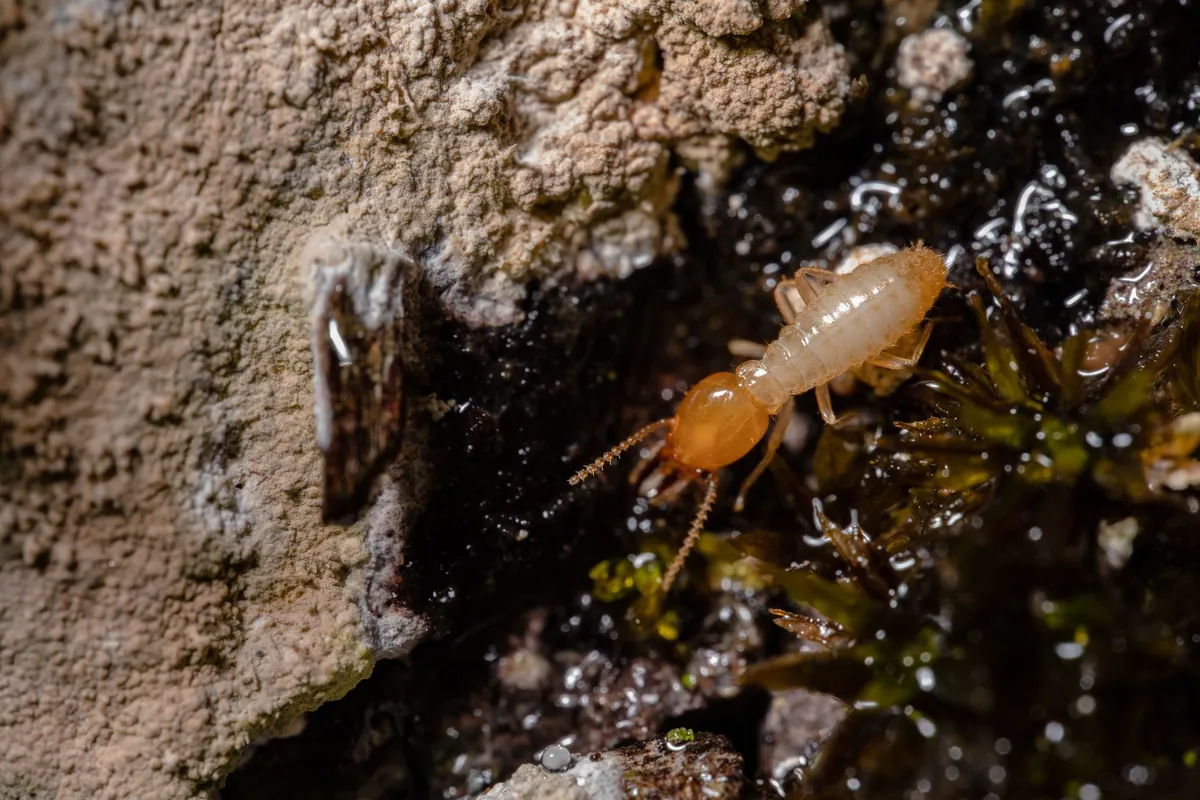
Termite tenting in Florida is structural fumigation: the house is covered with a tarp or tent and the air inside is filled with a fumigant gas, such as sulfuryl fluoride, to kill the termites living in the wood. The Florida Department of Agriculture and Consumer Services (FDACS) says only certified applicators can perform it, and it lists tent fumigation among the treatments pest management professionals typically use for extensive drywood termite infestations. It is a big job with strict rules, and you have to leave the house until the applicator tells you it is safe to return.
This guide explains when tenting is the right treatment, what FDACS requires before, during and after a fumigation, how to prepare your home, what to ask before you sign, and how to reach a participating termite company near you.
To check by phone whether a participating termite company serves your address, call (888) 217-7523. Florida Pest Control Pro does not perform pest control; we may be paid when you call.
When tenting is the treatment, and when it is not
Florida has several kinds of termites, and FDACS stresses that the treatment depends on which one is in the house. Its termite page lists four known types in the state: dampwood, drywood, subterranean and conehead termites.
- Drywood termites live and feed inside dry wood: roof framing, attic wood, door and window frames, furniture. Because the colony lives inside the wood rather than in the soil, FDACS lists different treatments for them, with tent fumigation used for extensive infestations.
- Subterranean termites, including Formosan termites, live and invade from underground. FDACS recommends a non-repellent chemical soil barrier or an in-ground bait system around the home for these, not tenting.
- Dampwood termites are treated mostly by removing the wet, infested wood and fixing the moisture problem; FDACS says a tent fumigation could be used only in very rare cases.
If you are not sure which termite you have, FDACS points to your local UF/IFAS county extension office for identification help, and a licensed pest control company will identify it during the inspection.
Signs of drywood termites that lead to a tenting quote
FDACS explains on its dampwood and drywood termite page that drywood colonies start with a swarm of winged reproductives that land, break off their wings and look for a crack, knothole or joint to enter. Points to watch:
- Winged insects flying in the evening during late spring to early summer, or just discarded wings on a windowsill.
- Entry points such as the joints under the eaves, attics, crawl spaces, cracks around window and door frames, fascia boards, soffits and knots in wood siding.
- Furniture, cabinets, hardwood floors or antiques recently brought into the house; FDACS says infested wood items are one way drywood termites arrive.
Drywood colonies grow slowly. FDACS notes the first swarmers may appear between year four and seven, so by the time you see them, the colony has been there a while. Either way, FDACS says to contact a pest management professional for an inspection and identification.
Tenting compared with the other drywood options
FDACS says drywood treatments vary greatly. For extensive infestations, professionals typically use structural tent fumigation, along with structural heat treatments and localized treatments with labeled termiticides and essential oils registered for use in Florida. Removing infested wood can also be effective. The choice depends on how far the infestation has spread, which the inspection should document.
| Option FDACS mentions | What it treats | What to ask the company |
|---|---|---|
| Structural tent fumigation | The whole structure at once; used for extensive infestations | Which fumigant, how long the house will be tented, and who holds the certified applicator license |
| Structural heat treatment | The structure, without a fumigant gas | Which areas will reach the target heat, and what must be removed beforehand |
| Localized treatment (labeled termiticides, essential oils registered in Florida) | Specific boards or areas where termites were found | How you will know the infestation is limited to those areas |
| Removal of infested wood | Damaged pieces that can be replaced | Who repairs the wood, and whether a treatment is still recommended |
FDACS recommends that any pesticide application be done by a licensed pest management company.
What FDACS requires before, during and after a fumigation
The FDACS Structural Fumigation FAQ sets out the protections homeowners should expect:
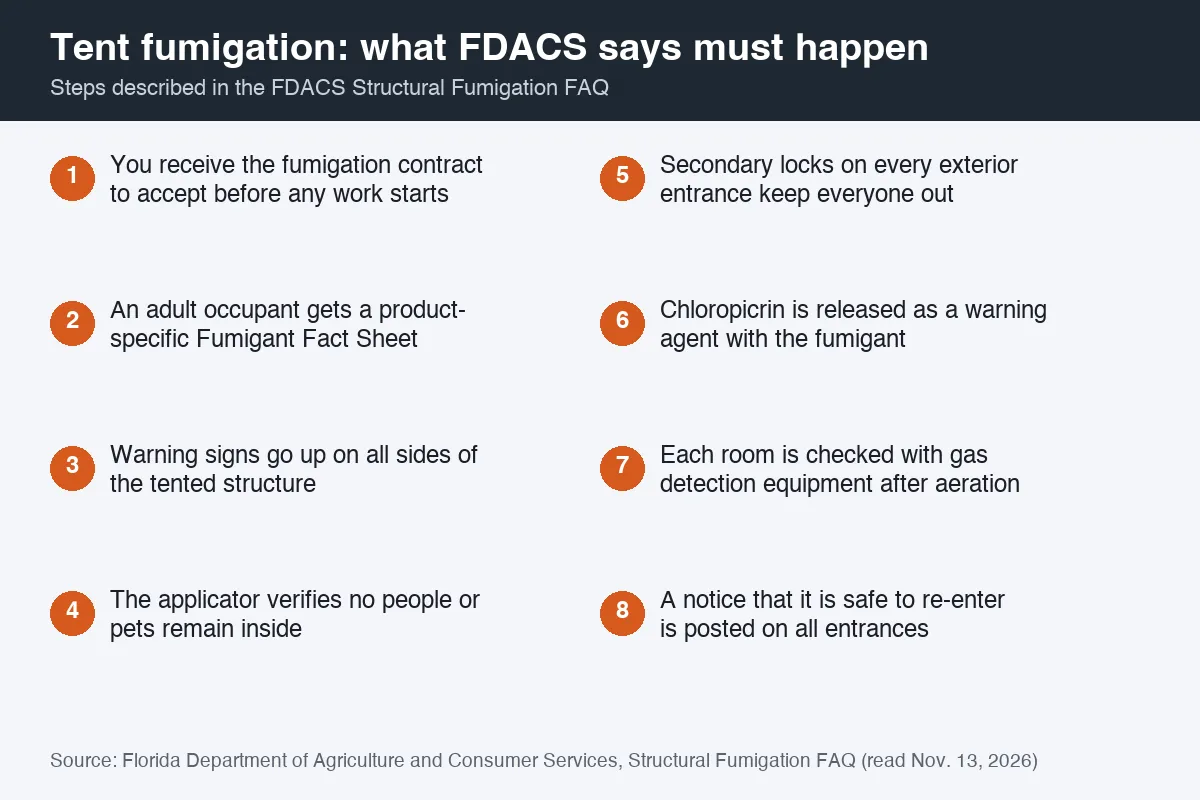
- Before: the company must present a copy of the fumigation contract to the owner for acceptance before any work is performed, and give a product-specific “Fumigant Fact Sheet” to an adult occupant of each structure or unit.
- During: the certified applicator puts warning signs on all sides of the structure, verifies that no people or pets remain inside, and secures every exterior entrance with secondary locks that keep everyone, including the homeowner, out. Because sulfuryl fluoride is colorless and odorless, applicators must also release chloropicrin as a warning agent; it irritates the eyes and has a pungent odor at very low concentrations.
- After: the applicator aerates the structure and checks each room with gas detection equipment, then posts a notice on all entrances stating that it is safe to re-enter. If you do not see that notice, FDACS says to contact the applicator and not go back in.
The applicator will ask for a key. FDACS explains this is so they can confirm no person or pet is inside and respond quickly in an emergency.
Ready to compare tenting quotes? Call (888) 217-7523 and say that you need a drywood termite inspection and a fumigation estimate.
How to prepare your home for tenting
Your certified applicator gives the instructions for your house. FDACS lists the kind of preparation you may be asked to do:
- leave dresser drawers partially open and all interior doors open,
- open plastic storage boxes or leave their lids ajar,
- double-bag foods and medicines or remove them from the house,
- trim shrubbery back so the tarps fit,
- make sure there is separation between the house and any deck or fence posts so the tent can seal.
Plan for the whole household to be out, including pets and houseplants: FDACS says you must vacate during fumigation and not return for any reason until the applicator says it is safe. The length of time depends on the fumigant label and on how the aeration goes, so ask the company for its schedule in writing.
Safety questions homeowners ask about tenting
FDACS says structural fumigants are reviewed by the U.S. EPA and by FDACS before they are registered, and that the label instructions are designed to prevent exposure to unsafe levels. It also lists symptoms of exposure to high levels of sulfuryl fluoride: respiratory irritation, nausea, excess fluid in the lungs, sleepiness, pneumonia and convulsions. If you think you are ill because of a fumigation, FDACS says to seek medical attention immediately, and to contact Florida’s Poison Control Center or your county health department.
On residue, FDACS says modern fumigants are gases that dissipate during aeration and leave no residue on dishes, clothing or furnishings. On neighbors, it says there is no minimum distance between a fumigated house and the one next door, but connected structures require additional precautions and fumigated spaces must be made reasonably gas-tight.
What to ask before you sign a fumigation contract
- Which termite did you identify, and where? Can I see it on a diagram or in photos?
- Why tenting rather than a localized or heat treatment for my house?
- Who is the certified applicator, and what is the company’s FDACS license number?
- What does the contract cover: drywood termites only, or other wood-destroying organisms? Is there a warranty or a renewal, and what does it cost after the first year?
- How long will we be out of the house, and when will the re-entry notice be posted?
You can verify the company with FDACS before signing; our guide on how to check a Florida pest control license explains the lookup. For contract wording, see what to ask before you sign a pest control agreement in Florida.
FDACS also points out that homeowners insurance does not cover termite damage, which is one more reason to keep the inspection report and treatment contract with your house records. If you are buying or selling, our guide to reading a Florida WDO report shows where a previous fumigation would appear. For subterranean and Formosan termites, start from our page on termite control in Florida.
Questions homeowners ask
Is tenting the only way to get rid of drywood termites in Florida?
No. FDACS lists structural tent fumigation for extensive infestations, along with heat treatments, localized treatments with registered termiticides or essential oils, and removal of infested wood. The inspection should explain which fits your house.
How long do you stay out of the house after tenting?
Until the certified applicator has aerated the house, checked each room with gas detection equipment and posted a notice on all entrances that it is safe to re-enter. Ask for the planned schedule in your contract.
Will tenting leave residue on my dishes and clothes?
FDACS says modern fumigants are gases that dissipate during aeration and leave no residue.
Does tenting treat subterranean termites?
FDACS recommends a non-repellent soil treatment or an in-ground bait system for subterranean termites. Tenting is mainly used for termites that live inside the wood, such as drywood termites.
Does homeowners insurance pay for termite tenting?
FDACS says homeowners insurance does not cover damage caused by termites. Check your own policy for anything specific to your home.
Sources, consulted November 13, 2026: FDACS, Florida Structural Fumigation Information and Structural Fumigation FAQ; FDACS, Termites; FDACS, Dampwood and Drywood Termites; FDACS, Subterranean Termites. General information, not legal advice.
Checking what is available in your area
floridapestcontrolpro.com is a connection service. We do not perform pest control and we do not employ technicians. To check whether a participating independent provider serves your address, call the number on this page: a partner call service routes the call where a provider is available, and we may be paid when you call. Availability varies by area and by season, and you decide whether to move forward with anyone you speak to.
To check by phone, call (888) 217-7523 and describe where you found wings, droppings or damaged wood.